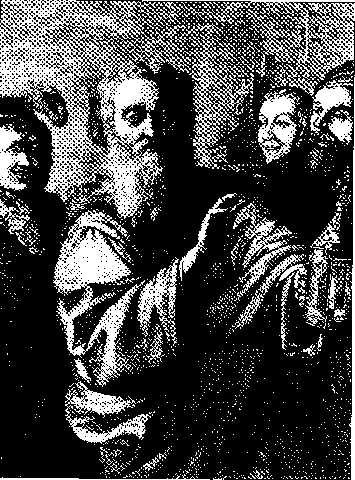
Diogenes holding his lantern, and
“searching for an honest man.”
There are many curious stories about Diogenes. He was an ascetic who proclaimed the simplest possible way of living. One story says that his only possession was a silver cup. When someone pointed out that you don’t really need a cup, you can drink water by just cupping your hands, Diogenes supposedly threw away his cup! Another story has it that Diogenes asked his friends not to bury him when he died; just leave his dead body out for the wild beasts to eat. When they refused this request he mocked them, because he knew that corpses are no longer human beings but simply dead matter.
The legend is that when Alexander the Great was named hegemon (boss) of the Hellenic League, many philosophers came to see him and congratulate him. But not the ascetic Diogenes, who lived in “a burial urn” (big clay tub). So Alexander went to see him, and asked if there were anything he could do for him. Diogenes, who had nothing, responded, “You could move away out of the sun and not cast a shadow on me.” When Alexander’s courtiers jeered at this, Alexander supposedly silenced them by saying “If I were not Alexander, I would be Diogenes.”
It is curious that most modern philosophers, who dare not even challenge their academic administrations—let alone the rulers of society—love this story so much! None of them seems to have applied a skeptical eye to a tale that has all the hallmarks of a self-serving invention of the philosophical community.
Of the teaching of one who could snub
Alexander the Great
With: “Move along, mate!
You are taking the sun off my tub.”
—Joyce Johnson
Diogenes is supposed to have gone about with a lantern “looking for an honest man,” as if no one else could match his lofty principles. But philosophy teachers usually forget to mention that he himself was run out of town for counterfeiting coins. (Sometimes it is said that it was his father who did this, but Diogenes admitted that he was the guilty party.) Have you ever noticed that those who most loudly insist that “everybody” is dishonest are usually crooks themselves, while those who say that most people are generally honest tend to be honest themselves? I’ll let you draw your own conclusions about Diogenes.
See also: CYNICS