COOPERATION — Evolution Of: Secondary Negative Aspects Of
Human beings are social creatures who have evolved both biologically and culturally to be
highly cooperative in the way that we live. Overall, of course, this is a very positive thing.
However, there may also be some secondary negative aspects to this. It is quite possible,
for example, that our human tendencies toward tribalism,
patriotism, and the ease with which our leaders get us to
follow them—even when it is not in our own interests to do so—are also results of the way
cooperation has evolved in humans and human society. To the degree that these things are
true there must be serious and ongoing efforts (such as education in socialist society) to
counteract these existing negative tendencies in human beings.
See also:
HUME’S PARADOX
“[The article] ‘How to Build a Dog,’ by Lyudmila Trut and Lee Alan
Dugatkin, describes a decades-long experiment in Siberia in which foxes were selectively
bred for tameness, resulting in physical traits we associate with dogs. Turning a fox
into a dog certainly offers insight into how our ancestors tamed other animals. But
maybe it also tells us something about how we tamed ourselves, changing from apes to
modern humans.
“The authors describe juvenile
facial characteristics as a component of the so-called domestication syndrome, and it
does distinguish us from our closest living relatives, chimpanzees and bonobos. Further,
docility is certainly necessary for large groups of humans to cooperate in urban
environments, even if it also predisposes us to ‘follow the leader,’ for good or for
ill.
“Fifty generations of foxes could
be bred in a single person’s lifetime, whereas 50 generations of humankind still take
us back only 1,500 years. How much have we been domesticating ourselves in the 10,000
years since agriculture and the first cities? Culture may be capable of driving biology
faster than we realize.” —Philip Early, of Bainbridge Island, Washington, in a letter
to the editor, Scientific American, Sept. 2017, p. 7.
[Mr. Early’s suggestion here
seems quite plausible: that human beings became more social and cooperative at least
in part because we continued juvenile features, including behaviors, into adulthood.
(The retention of juvenile characteristics into adulthood is called neoteny in
biology.) But, alas, along with cooperation this may also include a tendency toward
subservience, excessive tendencies to believe what we are told without question, and
small-group thinking. To the extent that these tendencies actually exist within us, it
is necessary to struggle ferociously against them, and to change our culture in order
to do that. This, however, will almost certainly require a social revolution to fully
accomplish. —S.H.]
COOPERATION — In Nature
[Intro material to be added... ]
See also:
KROPOTKIN, Peter
“Of Darwin’s doctrine, I accept the theory of evolution, but
assume Darwin’s method of verification (struggle for life, natural selection) to be
merely a first, provisional, incomplete expression of a newly discovered fact. Before
Darwin, the very people who now, wherever they look, see nothing but the struggle
for existence (Vogt, Büchner, Moleshott and others), once laid particular stress
on co-operation in organic nature, the way in which the plant kingdom supplies
oxygen and food to the animal kingdom and, conversely, the latter supplies plants with
carbonic acid and manure, as indicated notably by Liebig. Both conceptions are to some
extent justified, but each is as one-sided and narrow as the other. The interaction
of natural bodies—both dead and living—comprises harmony as well as strife, struggle
as well as co-operation. Hence, if a self-styled naturalist takes it upon himself to
subsume all the manifold wealth of historical development under the one-sided and
meagre axiom ‘struggle for existence’, a phrase which, even in the field of nature,
can only be accepted cum grano salis [with a grain of salt], his method damns
itself from the outset.” —Engels, Letter to Pyotr Lavrov, November 12-17, 1875, MECW
45:106-7.
COPENHAGEN INTERPRETATION (of Quantum Mechanics)
The absurdly idealist philosophical interpretation of quantum
mechanics put forth by Niels Bohr, Werner Heisenberg, and their supporters. According to
this bizarre conception, there is no such thing as an objective world until it is perceived
(or “measured”) by someone. Heisenberg, for example, stated that “Some physicists would prefer
to come back to the idea of an objective real world whose smallest parts exist objectively in
the same sense as stones or trees exist independently of whether we observe them. This however
is impossible.”
Another physicist, David Mermin of Cornell University, under the spell of the Copenhagen
Interpretation even went so far as to claim: “We now know that the moon is demonstrably not
there when nobody looks.” It is difficult to believe that
anyone can seriously put forward such nonsense!
In response to this sort of foolishness, Albert
Einstein commented: “The belief in an external world independent of the perceiving subject is
the basis of all natural science.” And he added, more
specifically, that “The Heisenberg-Bohr tranquilizing philosophy—or religion?—is so delicately
contrived that, for the time being, it provides a gentle pillow for the true believer from which
he cannot very easily be aroused. So let him lie there.” [All
these quotations are taken from Nick Herbert, Quantum Reality: Beyond the New Physics
(1987).]
See also:
COMPLEMENTARITY,
EINSTEIN-PODOLSKY-ROSEN THOUGHT EXPERIMENT,
SCHRÖDINGER’S CAT,
WAVE FUNCTION
“Despite the fact that every physicist agrees that quantum physics works,
a bitter debate has raged over its meaning for the past ninety years, since the theory was
first developed. And one position in that debate—held by the majority of physicists and
purportedly by Bohr—has continually denied the very terms of the debate itself. These
physicists claim that it is somehow inappropriate or unscientific to ask what is going on
in the quantum realm, despite the phenomenal success of the theory. To them, the theory
needs no interpretation, because the things that the theory describes aren’t truly real.”
—Adam Becker, What Is Real? The Unfinished Quest for the Meaning of Quantum Mechanics,
(NY: Basic Books, 2018), p. 5.
“It seems we all face a fundamental paradox in that it’s impossible to
think about the universe except in terms of its relation to humans. You can’t make sense
of language or even scientific laws or mathematics, without the concept of an observer,
and yet at the same time we know perfectly well that humans are a very late addition: the
universe was here long before us and will be here long after us.” —Michael Frayn, quoted
in “All the World’s a Stage”, New Scientist, Sept. 23, 2006.
[First of all, it is not
“impossible to think about the universe except in terms of its relation to humans”! Frayn
does this himself in this very paragraph when he mentions that the universe existed long
before humanity came to be, and will exist long after us. What is no doubt really going on
here is the perverse influence of the Copenhagen interpretation of quantum mechanics which
insists on inserting human perception of the world as a necessary aspect of it. Some people
cannot recognize a reduction to absurdity when it slaps them in the face! —S.H.]
CORNFORTH, Maurice (1909-1980)
British Marxist philosopher who—although a lifelong member of the Communist Party of
Great Britain, a totally revisionist party at least from 1950 on—wrote some very useful
works on philosophy. After graduating from University College, London, in 1929, he was
awarded a research scholarship at Trinity College, Cambridge, where he was the only
student in a specialized course in logic taught by G.E. Moore, R.B. Braithwaite, and
Ludwig Wittgenstein. Cornforth’s first stance in philosophy was that of the early
linguistic analysis style as a follower of
Wittgenstein. This background provided him with the basis for his much later Marxist
critique of bourgeois analytic philosophy in his book Marxism and the Linguistic
Philosophy (1965).
Cornforth joined the Communist Party in
1931 and set up the party’s first organization at Cambridge. He gradually developed into
one of the leading ideologists of the CPGB, especially in philosophy. For example, after
World War II he strongly criticized the aesthetic and philosophical views of the vaguely
semi-Marxist writer Christopher Caudwell, who had become something of an influential
figure in “Left” circles in the years after his death in 1937 while fighting in Spain
against the fascists. From 1950 to 1975 Cornforth was also the managing director of
Lawrence & Wishart, the CPGB publishing house, where he was responsible for launching
the massive effort to publish the 50-volume edition of Marx and Engels Collected
Works. (Unfortunately, after the collapse of the CPGB, Lawrence & Wishart became
just another bourgeois company and notoriously demanded that the Marxist Internet
Archive remove the digital portions of the MECW which they had made freely available
online.)
Cornforth published his first major
work, Science Versus Idealism in 1946, which as its subtitle states was “an
examination of ‘pure empiricism’ and modern logic”. It provides a history of
empiricism and criticizes a large variety of empiricist theories including those of
Hume, Kant and Mach, Bertrand Russell’s “Logical Atomism”, Wittgenstein, “Logical
Positivism” and the Vienna Circle, etc. Another book, In Defense of Philosophy
appeared in 1950, and is similarly focused on criticisms of empiricist philosophical
theories including not only positivism but also its pragmatist variety as in William
James, etc. A more general work, the Readers’ Guide to the Marxist Classics
appeared in 1952. Though this is now a somewhat dated volume which is heavy on the views
of Stalin and has nothing by Mao, it is still valuable.
Cornforth’s most important work is his
3-volume set Dialectical Materialism: An Introduction. The best of this set,
Materialism and the Dialectical Method first appeared in 1953, and the 4th
revised edition came out in 1968. It is a good introduction to many topics, such as
idealism vs. materialism, the Marxist concept of metaphysics,
mechanical materialism, and the Marxist
philosophy of dialectical materialism in
general. Even though the revisionist CPGB was quite hostile to Mao and Maoism after the
“Sino-Soviet Split”, Cornforth continued in this work to put forth some of the important
contributions by Mao to dialectics. The second volume in this series, Historical
Materialism has some good material, but is more strongly infected with a revisionist
outlook, especially in the last two chapters. The third volume, The Theory of
Knowledge also has some good material in it. Another useful and important book by
Cornforth is his reply to Karl Popper’s spurious attacks on Marxism: The Open
Philosophy and the Open Society (1968).
Cornforth’s writings:
• Food and Farming for Victory, Communist Party Pamphlet (1942)
• Science Versus Idealism: An Examination
of “Pure Empiricism” and Modern Logic (1946). Online at:
https://www.bannedthought.net/Britain/CPGB-Books/ScienceAndIdealism-Cornforth-1946.pdf
[Searchable PDF format: 18,498 KB]
• Dialectical Materialism and Science (1949; 68 pages).
Online at:
https://www.bannedthought.net/Britain/CPGB-Pamphlets/DialecticalMaterialismAndScience-Cornforth-1949.pdf
• In Defense of Philosophy — Against Positivism and Pragmatism (1950)
• Science for Peace and Socialism (c.1950) with J. D. Bernal
• Readers’ Guide to the Marxist Classics (1952). Online at:
https://www.bannedthought.net/Britain/ReadersGuideToMarxistClassics-1952.pdf
• Dialectical Materialism: An Introduction (3 vols.)
— Materialism & the Dialectical Method (1953;
4th rev. ed. 1968). A somewhat poor scan of the 4th edition is at:
https://archive.org/details/MaterialismDialecticalMethod
— Historical Materialism (1954; 2nd rev. ed. 1962)
A pretty good scan (but with a few marginal notes) is online at:
https://www.bannedthought.net/Britain/CPGB-Books/HistoricalMaterialism-Cornforth-2ndEd-1962.pdf
[Searchable PDF format: 8,986 KB]
— Theory of Knowledge (1955; 3rd rev. ed. 1963)
A somewhat poor scan of the 3rd edition is at:
https://archive.org/details/CornforthTheoryOfKnowledge
• Rumanian Summer: A View of the Rumanian People’s Republic
(1953), co-author with Jack Lindsay. Online at:
https://archive.org/details/RumanianSummer
• “On the Theory of Socialist Revolution”, article in Marxist Quarterly,
July 1956. Seems to accept Khrushchev’s total denunciation of Stalin at face value. Online at:
https://www.marxists.org/archive/cornforth/1956/theory-revolution.htm
• Philosophy for Socialists (1959)
• Marxism and the Linguistic Philosophy (1965; 2nd ed. 1967)
ISBN 0853151199, online at:
https://www.bannedthought.net/MLM-Theory/Diamat/Analytic-LinguisticPhilosophy/MarxismAndTheLinguisticPhilosophy-Cornforth-1967-OCR-sm.pdf
[Searchable PDF format: 8,004 KB]
• The Open Philosophy and the Open Society: A Reply to Dr. Karl Popper’s
Refutations of Marxism (1968) ISBN 0853153841 Online at:
https://archive.org/details/CornforthOpenPhil
• Communism and Human Values (1972)
ISBN 0717803783
• Rebels and Their Causes: Essays in honour of A. L. Morton (1978),
editor ISBN 0853154805
• Communism & Philosophy: Contemporary Dogmas and Revisions of Marxism
(1980) ISBN 0853154309
CORPORATE CAPITALISM
The form of capitalism in which corporations dominate.
“Originally, private capitalist property assumed almost exclusively the
individual form. An enterprise was the property of one capitalist who did not share
it with anyone else. Historically this form corresponded to the development of capitalist
production from simple-co-operation to the factory. Up to the last third of the 19th
century, it predominated in all industrially developed countries. But the growth in the
size of enterprises, the concentration and centralization of capital led to the appearance
and then to the prevalence of the collective-capitalist form of property. The latter,
known as the joint-stock or corporate form, grew up as a means which
gigantically accelerated the accumulation of capital.
“The corporate form of capitalist
property in no way effects the qualitative side of the relations which exist in production,
it does not abolish the exploitation of wage labor. It merely signifies a certain
realignment within the class of capitalist owners. The place of the individual
exploiter is taken by a group, a collective of exploiters. ‘Scattered capitalists are
transformed into a single collective capitalist,’ Lenin remarked discussing the banks, but
this statement is fully applicable to the corporate form in general. [Lenin source: LCW
22:214.]
“The corporate form, born in the era
of free competition, is also ideally adapted to the conditions of monopoly capitalism. It
opens up wide scope for the unprecedented concentration of industry and banking, provides
a very convenient and flexible form for organizing the largest monopolies, trusts and
concerns; it is the basic instrument for the domination by separate groups of the financial
oligarchy over a number of formally independent enterprises and for their enrichment on
manipulations with fictitious capital. Lastly, the
corporate form makes it easier to export capital, to divide the world economically among
alliances of capitalists and to merge the financial oligarchy with the state machine.”
—S. Menshikov, Millionaires and
Managers: Structure of U.S. Financial Oligarchy (Moscow: 1969), pp. 11-12. [This
very useful book, though outdated in many respects, is available online at:
https://www.bannedthought.net/MLM-Theory/PoliticalEconomyOfCapitalism/US-Capitalism/MillionairesAndManagers-Menshikov-1969-OCR-sm.pdf
CORPORATE DEBT
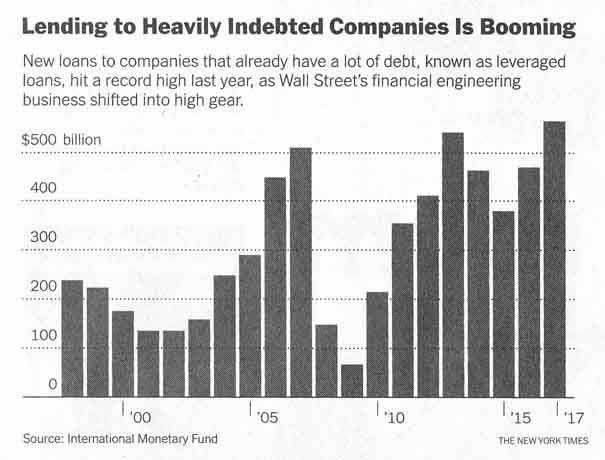 The debt owed by an individual corporation, or else by all the corporations in a given
country or given industry.
The debt owed by an individual corporation, or else by all the corporations in a given
country or given industry.
Why would a corporation, which has been
making profits and which expects to continue to exist as a profit-making entity, ever go
into debt? Well of course there may be periods, such as during a recession, when its
profits do not cover its expenses, and therefore when it needs to borrow money in order
to “tide it over” until conditions improve and it resumes making profits once again.
Similarly, an individual corporation may find that its product line has fallen out of
favor with consumers and that it needs to borrow money to re-tool or build a new factory
to produce some new or improved line of commodities. But interestingly enough, most
corporate debt is not taken on for rational reasons such as these. Instead, in modern
capitalism a huge amount of debt is often amassed by companies in order buy other
companies, or even for such rather frivolous reasons as to buy back part of their own
public stock! (This last option leads to personal profits for the corporate managers and
the other owners of that stock by driving up the stock price. It amounts to a method of
looting the company.)
You might think that corporations, which
after all often pull in enormous profits from their customers, might generally be flush
with cash, and in numerous cases they are. (See
CORPORATIONS—Cash Hoards Of below.) But
in many other cases companies have not retained their profits as a cash cushion,
or have blown it on unwise acquisitions, or have simply been looted by banks, financial
institutions, and so-called “private equity” pirate operations. In these cases the
corporations are themselves very vulnerable if the economy should weaken or develop into
a recession. And if a number of large corporations fail during an economic crisis, that
crisis can then be greatly intensified. This perfectly describes the situation at present
(2018): a great many U.S. corporations are now quite vulnerable if a new financial crisis
and/or economic downturn should occur, despite the fact that corporate profit rates
at present are still near historic highs.
“Among corporations listed on the S&P 500 [stock] index, debt has
tripled since 2010 to one and a half times annual earnings—near the historic peaks
reached during the recessions of the early 1990s and 2000s. And in some parts of the
bond markets, debt loads are much higher.
“One of the big corporate debt
risks is developing largely beyond regulatory oversight. Some United States companies
that were publicly traded in 2008 have since gone private, often precisely in order
to avoid intensified scrutiny from regulators. Many of those companies were purchased
by private equity firms in deals that left the companies saddled with huge debts. Right
now the typical American company owned by a private equity firm has debt six times
higher than its annual earnings—or twice the level that a public ratings agency
would consider high risk or ‘junk’.” —Ruchir Sharma, Chief Global Strategist at
Morgan Stanley Investment Management, a big Wall Street firm, New York Times,
Sept. 19, 2018, p. A-19.
CORPORATE DEBT — Role in Financial Crises
Most capitalist economic crises are overproduction crises
and are thus most centrally due to the fact that workers are not (and cannot be) paid for all the
value of the products they create, and therefore cannot possibly buy them all back. However, such
crises can be postponed through the expansion of consumer debt; that is, by allowing workers and
the masses to pay for products by going into ever greater debt. But as massive as such consumer
debt becomes, in all its forms (such as mortgages, auto loans, personal loans, student debt, etc.),
this is still not nearly enough to keep a powerfully productive capitalist economy going for long.
For this reason, other important sources of debt expansion are also needed. One of the most important
is the expansion of government deficit financing (also known as Keynesian
deficit financing). But a third extremely important method of debt expansion to keep a capitalist
economy functioning for the time being is through the massive expansion of the debt incurred by
corporations themselves! In different eras and occasions the relative importance of these three central
forms of debt expansion may vary, though in the modern capitalist-imperialist world all are very
important.
A recent paper by bourgeois economists claims that
corporate debt expansion may be much more important than is sometime supposed in both postponing
economic crises and then in eventually bringing them on, or recovering from them. (See summary below.)
[March 11, 2024]
“Using a new dataset on sectoral credit exposures covering financial and
non-financial sectors in 115 economies over the period 1940–2014, we document the following
evidence that corporate debt plays a key role in explaining boom-bust cycles, financial crises,
and slow macroeconomic recoveries: (i) corporate debt accounts for two thirds of the aggregate
credit expansion before crises and three quarters of total nonperforming loans during the bust;
(ii) expansions in corporate debt predict crises similarly to household debt; (iii) a measure of
imbalance in credit growth flowing disproportionately to some sectors, such as construction and
non-bank financial intermediation, is associated with crises; and (iv) the recovery from financial
crises is slower after a boom in corporate debt, especially when backed by procyclical collateral
values, due to higher nonperforming loans.”
—Victoria Ivashina, Sebnem Kalemli-Özcan,
Luc Laeven & Karsten Müller, “Corporate Debt, Boom-Bust Cycles, and Financial Crises”, summary,
NBER Working Paper 32225, March 2024. Online at:
https://www.nber.org/papers/w32225?utm_campaign=ntwh&utm_medium=email&utm_source=ntwg14
CORPORATE TAXES [U.S.]
“How much tax do corporations pay? In theory, their top tax
rate is 35 percent—one of the highest in the world. In reality, most U.S. companies
pay far less by exploiting tax breaks and loopholes. Of the 500 major companies in
the S&P 500 stock index, 115 paid a tax rate of less than 20 percent over the past
five years. Nearly 40 paid less than 10 percent. Boeing, for example, paid 4.5
percent in taxes on its profits over the past five years, Southwest Airlines paid
6.3 percent, and Yahoo paid 7 percent, according to research firm Capital IQ. General
Electric, one of America’s largest corporations, reportedly will pay little or no
federal tax on its $14.2 billion in global profits for 2010.
“Has it always been this
way? No. As a result of the loopholes and deductions added to the byzantine tax
code in recent decades, corporations pay a far smaller share of total U.S. taxes
than they once did. In the 1950s, Washington collected 30 percent of all its federal
revenue from business taxes. Last year, it was just 9 percent.” —The Week [a
bourgeois news magazine], Sept. 2, 2011, p. 13.
[Of course it is only liberals
who argue about whether corporate taxes are “too low” or not; Marxist revolutionaries
don’t think capitalist corporations should exist at all. —S.H.]
“Corporations are paying the lowest level of taxes in four decades.
Last year companies paid taxes of just 12.1 percent on their U.S. profits, the lowest
share since at least 1972 and far lower than the 25.6 percent they paid on average
from 1987 to 2008.” —A Wall Street Journal report quoted in The Week,
Feb. 17, 2012, p. 38.
“2/3 of US companies pay no federal income tax (and that was true even
before Trump and Congress slashed corporate tax rates).” —Mailing from Mother Jones
magazine, Dec. 28, 2018.
See also: TAX LAWYERS,
TAX LOOPHOLES, INVERSIONS
CORPORATION — As a “Person”
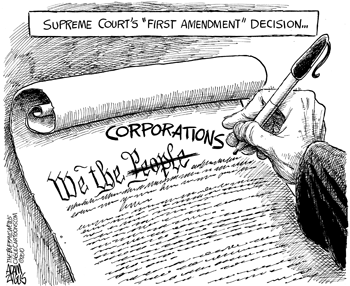 In 1886 the U.S. Supreme Court ruled in the case of Santa Clara County v. Southern
Pacific Railroad Company that a corporation has some of the same legal rights
as a person, a human being, has. Since then this absurd doctrine has been expanded
by the courts as well as in actual practice to cover other legal rights of persons under
the U.S. Constitution. At present this has reached the point where corporations now
ridiculously claim to have the right of “free speech”, and thus supposedly cannot be
prevented from spending millions of dollars to promote politicians who are in their pocket,
nor from indoctrinating the public with reactionary ideas and opinions that suit them.
Corporate capitalism already essentially controls the U.S. and the world, but this is not
enough for them. They want to keep expanding their control and power until it is
absolute, and the masses have no say whatsoever. Thus one liberal bourgeois constitutional
scholar, Garrett Epps, after attending Supreme Court hearings in 2009, expressed the
opinion that some Justices (such as John Roberts and Antonin Scalia) now seem to feel that
corporations do not simply enjoy the same rights as persons, but rather that they
actually enjoy greater rights than mere people do!
In 1886 the U.S. Supreme Court ruled in the case of Santa Clara County v. Southern
Pacific Railroad Company that a corporation has some of the same legal rights
as a person, a human being, has. Since then this absurd doctrine has been expanded
by the courts as well as in actual practice to cover other legal rights of persons under
the U.S. Constitution. At present this has reached the point where corporations now
ridiculously claim to have the right of “free speech”, and thus supposedly cannot be
prevented from spending millions of dollars to promote politicians who are in their pocket,
nor from indoctrinating the public with reactionary ideas and opinions that suit them.
Corporate capitalism already essentially controls the U.S. and the world, but this is not
enough for them. They want to keep expanding their control and power until it is
absolute, and the masses have no say whatsoever. Thus one liberal bourgeois constitutional
scholar, Garrett Epps, after attending Supreme Court hearings in 2009, expressed the
opinion that some Justices (such as John Roberts and Antonin Scalia) now seem to feel that
corporations do not simply enjoy the same rights as persons, but rather that they
actually enjoy greater rights than mere people do!
“Corporations are people, my friend!” —Mitt Romney, leading
candidate for the Republican presidential nomination, while campaigning in Iowa,
Aug. 11, 2011.
CORPORATIONS — Cash Hoards Of
 During good economic times and booms, capitalist corporations do not generally keep huge
amounts of cash on hand, beyond what is needed for ordinary operating expenses and a
reserve fund for exceptional situations. Instead, they typically use their excess money
to invest in the expansion of production or else to pay off existing debt.
During good economic times and booms, capitalist corporations do not generally keep huge
amounts of cash on hand, beyond what is needed for ordinary operating expenses and a
reserve fund for exceptional situations. Instead, they typically use their excess money
to invest in the expansion of production or else to pay off existing debt.
However, at the present time there is
a still-developing long-term overproduction
crisis in the U.S. and world capitalist economies. In this situation most corporations
can already produce all the goods they can sell with their existing factories and machinery
and have no reason at all to expand production to any greater excess over what they have
already done. Moreover, many of them have either little debt or else only have long-term,
low-interest debt, which does not need to be paid off soon. Furthermore, as of 2014
corporate profits are at or near record levels. In this situation U.S. corporations are
accumulating ever-greater hoards of cash which they simply do not know what to do with!
(Many, however, have been resorting to massive stock
buy-backs, to keep their piles of cash from growing quite so fast.)
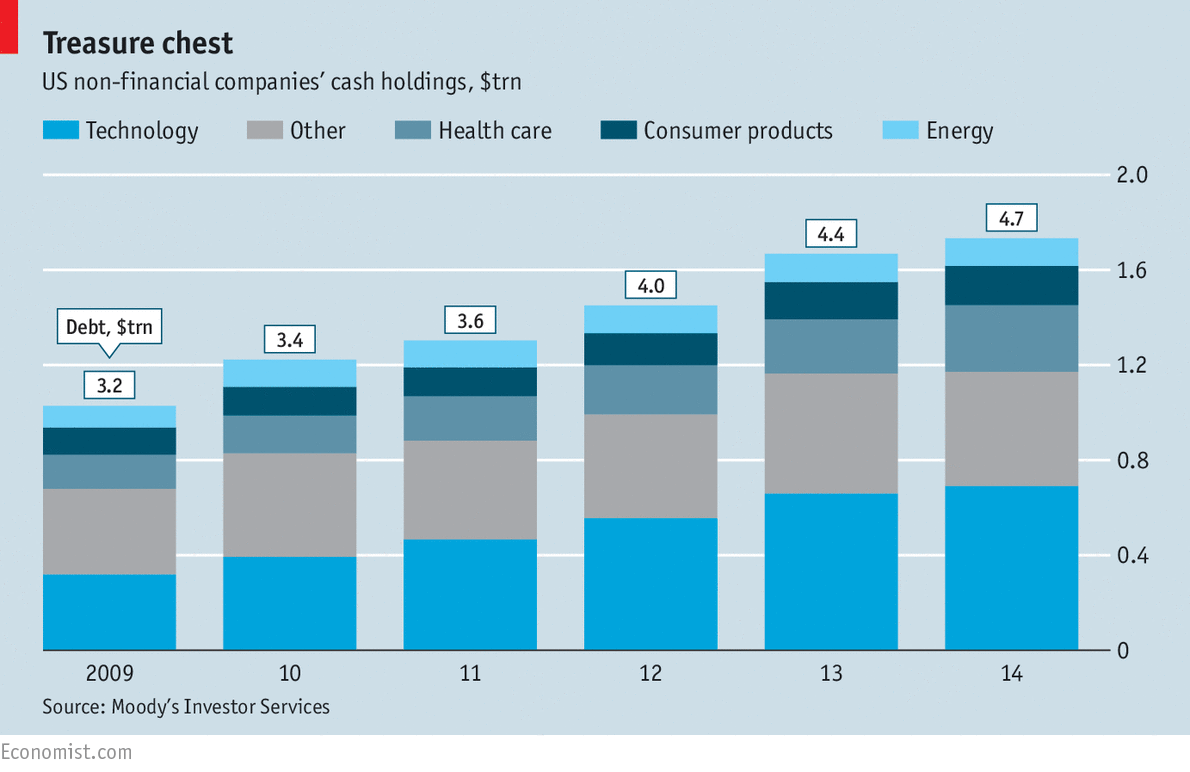
In the chart at the right we see the
rapid accumulation of cash by American non-financial corporations over the last few years.
(This does not include the huge piles of money that banks and financial institutions have
also accumulated, let alone the trillions of dollars which the Federal Reserve has created
and made available to banks in its programs of quantitative
easing.)
The Economist noted in its caption
for this chart that:
“Corporate America is holding $1.73 trillion in cash, with the top
five companies hoarding almost half a trillion between them, according to a report
published by Moody’s Investor Services. The firm estimates $1.1 trillion (or 64%) of
the total is being held abroad, a 16% increase on the previous year, as companies
choose to take advantage of cheap borrowing costs at home to fund their spending,
rather than face the tax bill when repatriating profits. Technology firms are
increasingly responsible for this stockpiling of money. Tech companies now hold $690
billion in cash between them, more than double their 2009 holdings, and 40% of the
total. Apple alone holds $178 billion.” [May 16, 2015, p. 85.]
“By the Numbers:
“... 2.5 trillion dollars:
[The] estimated value of untaxed cash held overseas by US companies—equivalent to
almost 14 percent of the country’s GDP, according to CNBC.” —Miguel Salazar, The
Nation, Sept. 25/Oct. 2, 2017, p. 4. [Thus an additional reason for the
giant corporate cash hoards which are kept overseas is to avoid taxes on profits if
they are repatriated to the U.S. —Ed.]
CORPORATIONS — Extravagances Of
 More and more of the world’s wealth is being captured by the giant multinational corporations.
This continues to be true even while the long-developing world capitalist
overproduction crisis intensifies, which means
that many big corporations are awash in huge cash hoards that they don’t know what to do
with. (See entry above.) This has led a number of them into a trend of creating enormously
wasteful monuments to themselves, on a par with the giant pyramids of the ancient Egyptian
pharaohs. The picture at the right is of the new enormously expensive Apple Corporation
headquarters now under construction in Silicon Valley (California), which is in the shape
of a giant space ship.
More and more of the world’s wealth is being captured by the giant multinational corporations.
This continues to be true even while the long-developing world capitalist
overproduction crisis intensifies, which means
that many big corporations are awash in huge cash hoards that they don’t know what to do
with. (See entry above.) This has led a number of them into a trend of creating enormously
wasteful monuments to themselves, on a par with the giant pyramids of the ancient Egyptian
pharaohs. The picture at the right is of the new enormously expensive Apple Corporation
headquarters now under construction in Silicon Valley (California), which is in the shape
of a giant space ship.
“Several months before he died in 2011, Steve Jobs, Apple’s founder
and the mastermind of the project, predicted that the spaceship-like structure would
become ‘the best office building in the world’ and that people from everywhere would
travel to see it.
“To prove Jobs right, around 13,000
construction workers have labored for years behind thick, high walls. The site spans
several city blocks. Earlier this year, everything was hidden from view except cranes
and a huge sand pile that rose a few hundred feet high, like the Great Pyramid of
Giza. The scale of the project rivals the ancient Egyptians’ monuments. Every piece
of glass on the four-story exterior is curved, requiring special panes to be made in
Germany—the largest pieces of curved glass ever manufactured. With a price tag of
around $5 billion, it may be the most expensive corporate headquarters in history.”
—“Versailles in the Valley: The
World’s mightiest technology firms are building monuments to their success”, The
Economist: 1843, April-May 2016, p. 35. [Can you imagine how many starving
children’s lives could be saved if Apple had instead donated this $5 billion to
alleviate world hunger? We are sure that thought
never occurred to the criminal bourgeois hero, Steve Jobs. —Ed.]
CORPORATIONS — Shareholders Of
It is commonly supposed that the shareholders of a corporation, i.e., those who own the shares
in the corporation, are thereby those who own and control the corporation itself,
including its assets and its profits. This is largely a myth in the modern Anglo-American
capitalist world, as the excerpts below from a letter published in the Economist magazine
make clear.
“The notion that shareholders ‘own’ the corporation is in most important
respects wrong and needs careful qualification. Institutional investors (commonly referred
to as shareholders) in publicly traded corporations under Anglo-American jurisdictions are
in many fundamental respects different from the shareholders of private and untraded
corporations.
“They do not and cannot, because of
limited liability, own the assets of the corporation....
“The corporation owns its assets and
the board [of directors] manages these assets. The only thing the shareholders own is a
conditional claim on the profits of the corporation, depending ultimately on the board as
to what dividend, if any, the corporation declares. The only ultimate sanction they have
is to sell and buy [shares] elsewhere.
“The problem with the boards of
publicly traded corporations is that they have too much unaccountable power. Because the
boards are unitary in structure there is no proper or effective independent governance.
The scale of cronyism is both wider and deeper than [the Economist] cares to admit.”
—Richard Tudway, London, letter to the Economist, published Sept. 6, 2014, p. 22.
CORRUPTION
The extra-legal expropriation of wealth by some group or individuals (usually capitalists
and their servants) for their own benefit and personal aggrandizement. Corruption is
officially regarded as an evil in bourgeois society because it degrades the credibility
of the system in the eyes of the proletariat (and in some cases even destabilizes and
threatens the viability of the system itself). Corruption is supposed to be “policed” by
various regulatory and investigative bodies of the state. However, in the era of
monopoly-finance capitalism, the large enterprises and banks have become so powerful that
most “punishments” they receive are effectively little more than slaps on the wrist
designed to placate public hostility. Occasionally, however, some capitalist or servant
of capitalism is convicted of a particularly brazen crime and much fanfare is devoted to
the need for subsequent reforms intended to “prevent” people like this from being
empowered. Of course, corruption—and the personalities that partake in it!—are themselves
organic outgrowths of the basic relations of production in capitalist society, and are
another manifestation of how capitalists become “the embodiment of capital”. —L.C.
“It is hard to say which has sunk lower in the last three years,
the monarchy or the republic. The monarchy—on the continent of Europe, at least—is
everywhere assuming its final form. Caesarism, at an increasing pace. Everywhere
sham constitutionalism with universal suffrage, an overgrown army as the buttress
of government, bribery and corruption as the chief means of government, and
enrichment through corruption and fraud as the sole end of government, are
irresistibly undermining all the splendid constitutional guarantees, the artificial
balance of forces of which our bourgeois dreamt in the idyllic days of Louis Philippe,
when even the most corrupt were still angels of innocence compared with the ‘great
men’ of today. As the bourgeoisie daily loses the character of a class temporarily
indispensable in the social organism, shedding its specific social functions to
become a mere gang of swindlers, its state turns into an institution for the
protection, not of production, but of the overt theft of products.... The republic,
however, is not faring any better.” —Engels, “The Republic in Spain” (Feb. 1873),
MECW 23:417. [We wonder what Engels would have thought of the vastly more extreme
corruption in America today, when Wall Street swindlers control the government and
have been literally able to loot it and the public of trillions of dollars over the
past few years!]
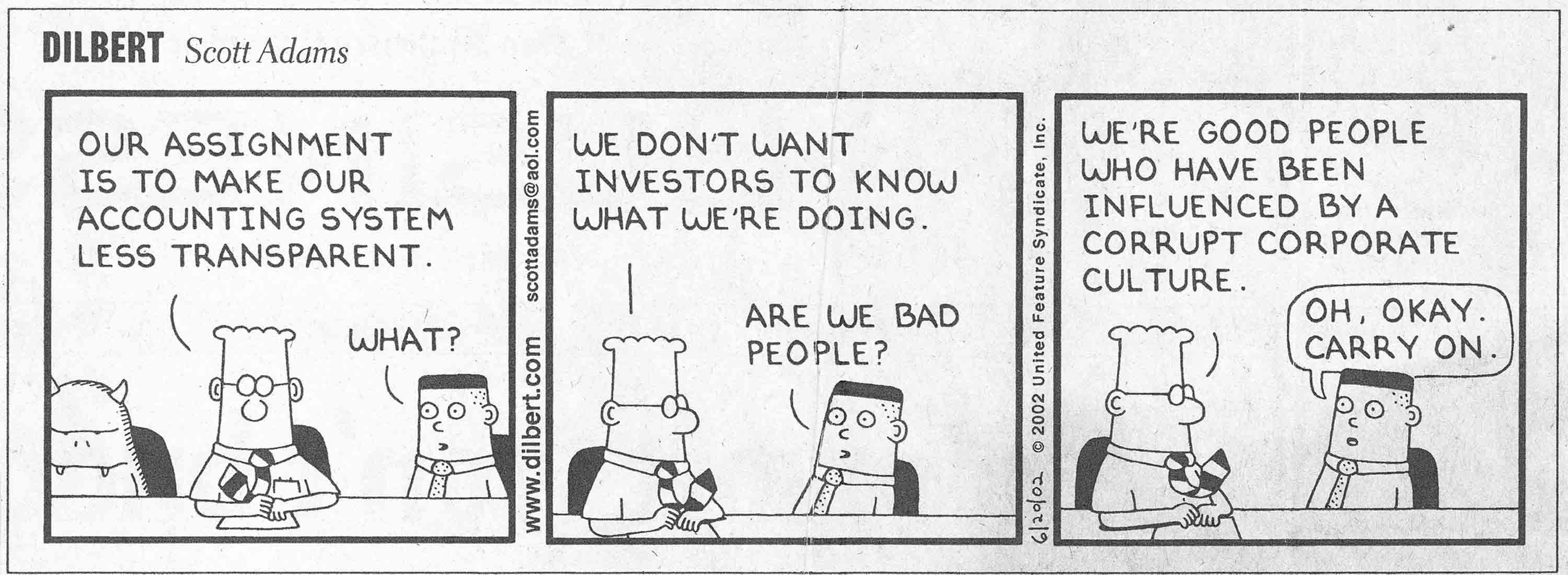
COSMOLOGICAL PRINCIPLE
The theory or claim that on the large scale the universe is the same everywhere else as it
is here where we human beings are. Although this is a reasonable hypothesis, and there is
some considerable evidence for it, it is by no means absolutely certain.
“The most distant and ancient signals we have observed so far are the
cosmic microwaves, the signal primeval. We believe that they began their journey 14
billion years ago, and when we look at them (using a microwave camera), we see the way
the universe looked back then. Of course, that light (microwaves are low-frequency
light) is showing us what existed both a long time ago and very far away; it traveled
14 billion light-years of distance to reach us.
“To say we are looking back in
time, we have to make the assumption that the distant universe, 14 billion years ago,
was very similar to what our nearby part of the universe was like back then....
[T]hat postulate is given a fancy name: the cosmological principle.
Specifically, it asserts that the universe is homogeneous (like homogenized milk; it
is uniform in composition without big lumps) and isotropic (no special directions; no
large scale organized motion; it isn’t, for example, spinning). If you don’t want
other people to realize that you are making a drastic assumption, call it a principle.
Cosmological principle is an awesome name; if you called it the raisin bread
model, it wouldn’t be so compelling....
“There is good evidence that the
cosmological principle is roughly true, at least true enough for our purposes. As we
look around the universe, particularly nearby, we find things that are very similar
to those in our neighborhood. We are in the Milky Way Galaxy..., but there seem to be
huge numbers of similar galaxies out there, spread out and spreading further
throughout space. Pick a small region of sky and, using our best telescopes, count
the galaxies and extrapolate to the regions unexamined, and you conclude that there
are over a hundred billion visible galaxies—most with fewer stars than our Milky Way
has.”
—Richard A. Muller, Now:
The Physics of Time (2016), pp.136-7. Muller is a well-known bourgeois American
physicist.
COUNCIL FOR MUTUAL ECONOMIC AID (CMEA)
An intergovernmental council, known familiarly as Comecon, originally set up in
January 1949 by the USSR, Bulgaria, Czechoslovakia, Hungary, Poland and Romania, to promote
mutual trade and the coordination of the economic plans of the member countries. Even during
the Stalin era the organization tended to serve the economic interests of the Soviet Union
more so than any of the other member countries. (This was an aspect of the “great nation
chauvinism” that Stalin was sometimes guilty of.) But in the revisionist period in the
Soviet Union (mid-50s on) Comecon became more and more simply a means for the social-imperialists
to exploit the other nominally socialist countries under their thumb. This occurred through
bullied and unfair trade agreements, international planning decisions more favorable to the
development of the Soviet Union than to the other countries, and so forth.
Albania joined CMEA in February 1949, East
Germany (the German Democratic Republic) in 1950, Mongolia in 1962, Cuba in 1972 and Vietnam
in 1978. Yugoslavia became an associate member in 1964. In the late 1950s North Korea and
China acquired observer status, though after 1961 China no longer sent observers. After 1961
Albania also no longer participated. Romania weakened its connection to Comecon in 1973 and
moved closer to the European Community.
Comecon was initially hailed by supporters of
the Soviet Union as “the Russian Marshall Plan”. In its early days it did help to develop
the economies of the Eastern European countries. Besides developing general goals for trade
and technical assistance, Comecon organized joint scientific research and development.
In 1954 Comecon moved more in the direction of
economic integration of the member countries through the coordination of the various five-year
economic plans, and in 1955 production priorities were set for each country. Energy policies
were also coordinated. In 1961 “Basic Principles” for the long-term development of member
countries were drawn up. But Khrushchev’s proposals in 1962 for the creation of a single
economic plan and single planning authority for all the countries was rejected by the other
Comecon countries on the grounds that it was a major encroachment on their national
sovereignty. Romania was especially outraged by the Soviet “suggestion” that it should
specialize in agriculture instead of any all-round development of its economy.
In the Brezhnev era the Soviet
social-imperialists further stepped up their efforts to integrate the Comecon economies
under Soviet direction, but there was much resistance to this from all the countries except
Bulgaria whose lacky rulers seemed happy with its assigned agricultural role.
In 1963 Comecon set up the International
Bank for Economic Cooperation as an alternative to the IMF, and in 1970 the International
Investment Bank to finance projects that were part of coordinated five-year plans, and as an
alternative to the World Bank.
The Comecon countries agreed in 1970 to
medium and long-term economic cooperation up to 1980, and a central planning bureau was set
up in Moscow to direct this. In 1987 joint Comecon ventures between some productive
enterprises and research institutes in the USSR and Eastern European countries were
established. But the still crude forms of economic cooperation were illustrated by the fact
that profits from these joint enterprises could be returned in the form of commodities because
of the problems involved in currency negotiations. Overall, trade and economic cooperation
and integration within Comecon declined during the Gorbachev period.
By 1989 the increasingly market-oriented
ideology in all the Comecon countries led to many calls for less economic planning, and there
no longer seemed much point to CMEA to the revisionists. In June 1991 CMEA was formally
dissolved.
See also:
“INTERNATIONAL DIVISION OF LABOR”,
“INTERNATIONAL SOCIALIST OWNERSHIP”,
“STRUCTURAL INTEGRATION”,
TRANSFERABLE RUBLE
COUNCIL OF TRENT (1545-1563)
An important council of the Roman Catholic Church attempting to deal with the then developing
Protestant Reformation. Among the important decisions was that only the Church authorities had
the “right” to interpret the “Holy Scriptures”. While we revolutionary Marxists don’t care at
all about the Bible or other religious foolishness, we do have our own analogous issue to consider:
Who has the “right” to interpret the Marxist-Leninist-Maoist classics? See:
INTERPRETATION—OF MLM TEXTS for a brief
discussion of this topic.
“Stunned by the Protestant Reformation fomented in Germany around 1517, the
Roman Church struck a defensive posture throughout the sixteenth and seventeenth centuries
called the Counter-Reformation. The Church hoped quickly to close the rift that had split
Protestantism from Catholicism by convening an ecumenical council, but intrigues and obstacles
of all sorts—including disputes over where to stage the event—postponed the meeting for
many years, while the rift continued to widen. Finally, Pope Paul III ... convened bishops,
cardinals, and leaders of religious orders at Trent, where Italy bordered the Holy Roman
Empire of the German nation. On and off over a period of eighteen years, from 1545 to 1563,
the Council of Trent debated and voted and ultimately drafted a series of decrees. These
dictated how the clergy were to be educated, for example, and who was empowered to interpret
Holy Scripture. Rejecting Martin Luther’s insistence on the right to a personal reading of
the Bible, the council declared in 1546 that ‘no one, relying on his own judgment and
distorting the Sacred Scriptures according to his own conceptions, shall dare to interpret
them.’
“After the council finally concluded
the twenty-five sessions of its long-drawn-out deliberations, its decrees became Church
doctrine through a series of papal bulls (so named for the bulla, or round lead seal,
affixed to pronouncements from the pope himself). In 1564, the year Galileo was born, certain
important points from the debates were formulated into a profession of faith, worded by the
Council of Trent and solemnly sworn over the ensuing decades by untold numbers of Church
officials and other Catholics:
“‘I most firmly accept and embrace
the Apostolic and ecclesiastical traditions and the other observances and constitutions of
the Church. I also accept Sacred Scripture in the sense in which it has been held, and is
held, by Holy Mother Church, to whom it belongs to judge the true sense and interpretation
of the Sacred Scripture, nor will I accept or interpret it in any way other than in
accordance with the unanimous agreement of the Fathers.’”
—Dava Sobel, Galileo’s Daughter
(NY: Penguin, 2000), pp. 71-72.
COUNTER-REVOLUTIONARIES — Suppression Of
“Without the system of democratic centralism, the proletarian dictatorship
cannot be consolidated. To practice democracy among the people and to practice dictatorship
over the enemies of the people, these two aspects are inseparable. When these two aspects
are combined, this is then proletarian dictatorship, or it may be called people’s democratic
dictatorship. Our slogan is: ‘A people’s democratic dictatorship, led by the proletariat,
and based on the alliance of the workers and peasants.’ How does the proletariat exercise
leadership? It leads through the Communist Party. The Communist Party is the vanguard of the
proletariat. The proletariat unites with all classes and strata who approve of, support and
participate in the socialist revolution and socialist construction, and exercises
dictatorship over the reactionary classes or the remnants thereof. In our country the system
of exploitation of man by man has already been eliminated. The economic foundations of the
landlord class and the bourgeoisie have been eliminated. The reactionary classes are now no
longer as ferocious as hitherto. For example, they are no longer as ferocious as in 1949
when the People’s Republic was founded, nor as ferocious as in 1957 when the right-wing
bourgeoisie madly attack us. Therefore we speak of them as the remnants of the reactionary
classes. But we may on no account underestimate these remnants. We must continue to struggle
against them. The reactionary classes which have been overthrown are still planning a
come-back. In a socialist society, new bourgeois elements may still be produced. During the
whole socialist stage there still exist classes and class struggle, and this class struggle
is a protracted, complex, sometimes even violent affair. Our instruments of dictatorship
should not be weakened; on the contrary they should be strengthened. Our security system is
in the hands of comrades who follow the correct line. It is possible that the security
departments in some places may be in the hands of bad people. There are also some comrades
engaged on security work who do not rely on the masses or on the Party. In the work of
purging counter-revolutionaries, they do not follow the line of purging them with the help
of the masses under the leadership of the Party committee. They rely solely on secret work,
on so-called professional work. Professional work is necessary; it is absolutely necessary
to use the methods of detection and trial to deal with counter-revolutionary elements, but
the most important thing is to carry out the mass line under the leadership of the Party
committee. When we are concerned with dictatorship over the whole reactionary class, it is
especially important to rely on the masses and the Party. To exercise dictatorship over the
reactionary classes does not mean that we should totally eliminate all reactionary elements,
but rather that we should eliminate the classes to which they belong. We should use
appropriate methods to remold them and transform them into new men. Without a broad people’s
democracy, proletarian dictatorship cannot be consolidated and political power would be
unstable. Without democracy, without the mobilization of the masses, without mass supervision,
it will be impossible to exercise effective dictatorship over the reactionary and bad
elements, and it will be impossible effectively to remold them. Thus they would continue to
make trouble and might still stage a come-back. This problem demands vigilance, and I hope
comrades will give a great deal of thought to this too.” —Mao, “Talk at an Enlarged Central
Work Conference”, Jan. 30, 1962; in Chairman Mao Talks to the People: Talks and Letters:
1956-1971 (1974), ed. by Stuart Schram, pp. 167-9.
“COUNTERVAILING POWER”
1. The erroneous theory in bourgeois so-called
“political science” that there are generally two or more centers of political power in society
which oppose each other and serve as “balances” or countervailing forces toward each other. This
notion is directly opposed to the Marxist view of the state as
virtually always being totally dominated by one or another social class to the point where it can
only be viewed as the dictatorship of that ruling class. Of
course, in modern society a relatively tiny ruling class such as the bourgeoisie must deny that
it is exercising a dictatorship and try to pretend that it is merely “one force among many” in
society.
2. The absurd liberal reformist doctrine that in
the United States a coalition of labor unions, small businesses, small investors, “progressive”
social forces and locally-based political parties (and especially the Democratic Party) can
“balance” the power of giant corporations, big banks and Wall Street, and implement and secure
major changes for the better in American society. This view also totally denies that there is a
dictatorship of the bourgeoisie in the U.S.,
and claims that “potentially at least” there is some actual democracy within American society
today.
The term “countervailing power” was popularized
by the liberal bourgeois economist John Kenneth Galbraith in his book American Capitalism
(1952) where he argued that the otherwise excessive power advantages of huge corporations and
banks could be offset in the labor market by powerful labor unions and within the political
system by these unions in alliance with small businessmen, citizens’ organizations, and so
forth.
The original inspiration for this idea was the
supposed great success of the New Deal in the 1930s. However, the very limited improvements in
capitalist society in the New Deal were only possible because of the extreme economic crisis of
capitalism during the Great Depression and the desperation
of the ruling class itself to maintain control by granting some temporary concessions to the
working class. Moreover, it was only possible for the ruling class to continue many of these
concessions for the quarter century following World War II because that war had temporarily
resolved the U.S. and world capitalist overproduction
crisis. However, that post-war boom came to an end in the mid-1970s, and since then there
has been a long period during which the New Deal social benefits and welfare state have been
gradually rolled back in the direction of eventual total elimination. The unions, the key
economic force which Galbraith and others have identified as a “countervailing power” to
corporations and Wall Street have been weakened to the point where they hardly matter any more.
(The percentage of unionized workers in U.S. private industry has fallen all the way down to
just 7.4% by 2015, and even those unions have little fight left in them. And, as far as political
influence goes, the richest fraction of 1% of the population donates far more to politicians than
all the unions put together now do.)
In short, whatever very limited and temporary
aspect of truth there may have once been to the notion of any “countervailing power” against the
corporations and the banks, it has now disappeared for good. Despite this, there continue to be
liberal reformers who still believe in the theory and still try to fool the working class into
believing it too. (See the quotes below from Robert Reich.)
“[The] ... centers of countervailing power that between the 1930s
and the late 1970s enabled America’s middle and lower-middle classes to exert their own
influence [in opposition to the big corporations and Wall Street]—labor unions, small
businesses, small investors, and political parties anchored at the local and state
levels—have withered. The consequence has been a market organized by those with great
wealth for the purpose of further enhancing their wealth. This has resulted in ever-larger
upward pre-distributions inside the market, from the middle class and poor to a
minority at the top....
“[T]he pay of average workers has gone
nowhere because they have lost their aforementioned countervailing economic power and
political influence....
“[T]he solution is not to create more or
less government. The problem is not the size of government but whom the government is
for. The remedy is for the vast majority to regain influence over how the market
is organized. This will require a new countervailing power, allying the economic
interests of the majority who have not shared the economy’s gains....
“My conclusion is that the only way to
reverse course is for the vast majority who now lack influence over the rules of the
game [in the American capitalist economy] to become organized and unified, in order to
re-establish the countervailing power that was the key to widespread prosperity five
decades ago.”
—Robert Reich, former U.S. Secretary
of Labor in the Bill Clinton administration, in his book Saving Capitalism
(2015), pp. xiv-xv.
[Of course Reich is entirely correct
when he says that the basic problem is “whom the government is for”. But what he
can’t understand or accept is that there is a capitalist ruling class and has been one
all along. He himself admits that the rich totally control the economy and the government.
And yet he still believes in the system that the enemy capitalist class totally controls;
he still imagines that “American democracy” can be made to work in the interests of the
people, despite the fact that it is the total instrument of the bourgeoisie for
maintaining and extending their wealth and political control of the country. —S.H.]
“But over the past three decades, countervailing power has almost
vanished from American politics. Labor unions have been decimated. In the 2012
presidential election, the richest 0.01 percent of households gave Democratic candidates
more than four times what unions contributed to their campaigns.
“Small retailers have been displaced
by Walmart and Amazon. Local banks have been absorbed by Wall Street behemoths.
“And both political parties have
morphed into giant national fundraising machines. The Democratic National Committee, like
its Republican counterpart, is designed mainly to suck up big money.” —Robert Reich, in
a column in the San Francisco Chronicle, Aug. 21, 2016, p. E8.
[After thus all but admitting that
there is really no objective basis whatsoever for any “countervailing power” within the
American economy or politics, Reich nevertheless went on to say that Hillary Clinton, if
she is elected president, will have to try to construct such a force from the defeated
Bernie Sanders supporters if she hopes to get anything at all accomplished in her term
of office. So what does Reich expect? That Clinton, this repulsive politician who concerns
herself with nothing except her own career, will urge the masses to riot in the streets
to promote real social change? How foolish can you be! —S.H.]
COVERT ACTION
“The term ‘covert action’ is a peculiarly American invention; it does not appear
in the lexicon of other intelligence services. Nor does the term appear in the National Security
Act of 1947, which created the Central Intelligence Agency. Covert action refers to secret
operations to influence governments, organizations, or persons in support of a foreign policy in a
manner that is not attributable to the United States....
“U.S. covert action, which began under the
Eisenhower administration, has been marked by incredible and often predictable failure. The worst
failures were in Iran (1953), Guatemala (1954), the Congo 1959, and Chile (1973), where leftist
leaders were overthrown only to be followed by the accession to power of authoritarians and tyrants
such as the Shah, Julio Alpirez, Mobutu, and Pinochet, respectively. These authoritarians
introduced brutal regimes and repressive military forces, many of whom received military training
from the CIA. When U.S. ambassadors in Central America protested this activity, they were ordered
to stop reporting on such criminal activity, and some were forced out of the Foreign Service.
“The CIA also trained and supported abusive
internal security organizations throughout Central America, particularly in Nicaragua, Honduras,
and El Salvador. In Honduras, death squads grew out of collaboration between the CIA and the
Honduran military. The CIA was closely involved in the formation and training of the notorious
Battalion 316, and CIA operatives had exclusive access to their secret detention centers.
“Revelations of assassination plots in Cuba,
the Congo, the Dominican Republic, and Vietnam in the early 1960s—at the direction of Presidents
Eisenhower and Kennedy—finally led to a ban on CIA political assassinations in the mid-1970s. In
1984, however, the CIA displayed its contempt for the ban on assassination when it produced a manual
for the Contras that discussed ‘neutralizing’ officials in Nicaragua.
“The nadir of the CIA’s covert action was the
Bay of Pigs invasion of Cuba in 1961, when U.S. and CIA ignorance of Fidel Castro’s popularity led
the CIA to launch an ill-fated paramilitary operation. Several Cubans, initially trained by the CIA
for covert action, were involved in the break-in of the Democratic National Committee’s office in
the Watergate complex ten years later.
“Despite the failures of clandestine activity
and covert action, the CIA has received increased funding annually from a bipartisan congress.”
—Melvin Goodman, “The Many Crimes of CIA
Covert Actions”, CounterPunch, Oct. 20, 2025. Goodman is a former CIA analyst. The full
article is available online at:
https://www.counterpunch.org/2025/10/20/the-many-crimes-of-cia-covert-actions/
COVID-19 PANDEMIC
 Covid-19 is the serious respiratory disease caused by the SARS-CoV-2 corona
virus. “Covid-19” is a shortened form of “corona virus disease 2019”. It is thought that the virus
causing this disease originally came from bats, and may have had another intermediate animal host before
finally reaching humans. (This is what happened with the related SARS corona virus disease.)
Covid-19 is the serious respiratory disease caused by the SARS-CoV-2 corona
virus. “Covid-19” is a shortened form of “corona virus disease 2019”. It is thought that the virus
causing this disease originally came from bats, and may have had another intermediate animal host before
finally reaching humans. (This is what happened with the related SARS corona virus disease.)
This disease first arose in December 2019 (or possibly
slightly before that), apparently in a public marketplace where meat from wild animals was sold in Wuhan,
China. (See the separate entry below for more about the confusion over the origins of this disease.) The
highly contagious disease then began to spread around China and the whole world in a major
pandemic, which by the end of 2022 still continued and spread rapidly,
in the form of newly evolving virus variants.
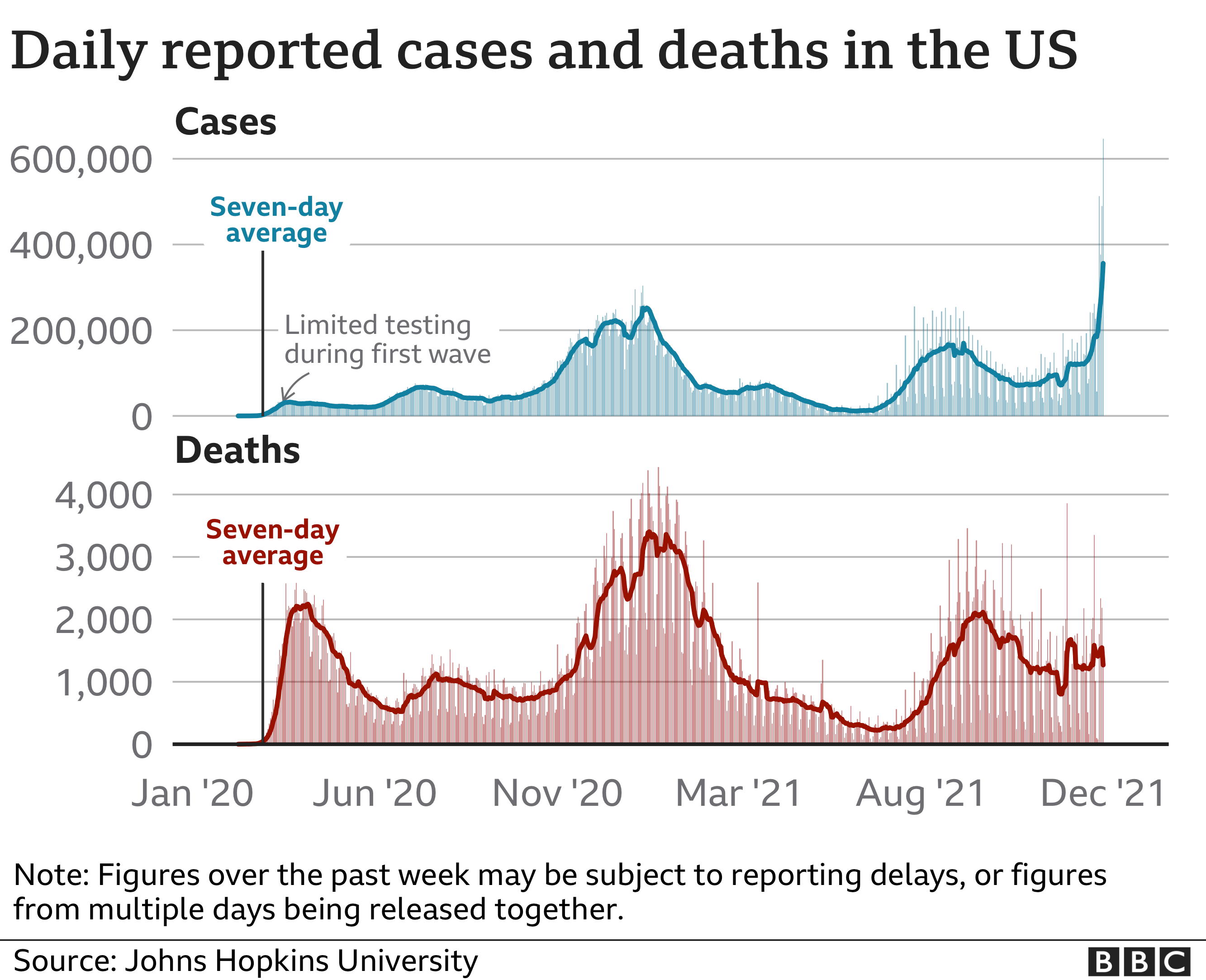
As of December 16, 2022, there were already 99,705,095
recorded cases of Covid-19 in the U.S. alone, and 1,083,279 deaths according to the Centers for Disease
Control. Worldwide there were at that time 657,745,906 recorded cases and 6,671,779 deaths. However, it
is generally thought that the number of deaths worldwide has been much larger than this, probably at
least 15 million so far, since the statistics are either unreliable or else purposely lied about in
some countries (and notably in India). In late December 2022 the Covid-19 death rates in the U.S. began
rising again to a level of over 400 per day, but then declined considerably in later years. As of 2026
there are still people in the U.S. and around the world dying from Covid-19. However, the death rate
from the disease has fallen tremendously, and the U.S. government says that Covid-19 now accounts
for just 0.1% of all deaths in the U.S.
In China the disease was recognized early on by
physicians as a new and dangerous outbreak, but the local politicians of the fascist capitalist regime
there refused to believe it and tried to punish those doctors for spreading unjustified rumors. The
earliest of these heroic whistle-blowing doctors, Li Wenliang, himself contracted Covid-19 and died
from it. However, China—to its credit—did eventually start to take the epidemic seriously, and used the
method of contact-tracing and isolating humans from each other to the maximum degree possible. For at
least a year and a half China managed to bring the disease outbreak under general control except for
occasional isolated outbreaks, usually thought to be caused by infections brought in by travelers from
outside the country. But it should also be added that this general control of the pandemic in China
was accomplished in a very authoritarian way, via extremely strict top-down orders, rather than by
educating and organizing the masses themselves in a mass line way as
would have certainly been done during the Maoist/socialist era in China. (For later information about
the progression of Covid-19 in China see the entry below about its economic effects in China.)
Curiously, other countries were mostly unable
to learn from China’s experience, and only began serious measures to try to isolate those infected
after the disease was already considerably out of control. This was especially the case in Italy and
Iran early on in the pandemic, though most other countries have followed the same path. New Zealand
had one of the most effective responses, and for a while Taiwan, South Korea, and a few other
countries were handling the outbreak fairly well. But new more infectious variants of the virus
proved very difficult to deal with even in these countries.
The response by the authorities in the U.S. was
one of the very worst in the entire world. In the decades before this pandemic the U.S.
government steadily decreased its funding and preparations for such an outbreak—even though
scientists have long predicted that something like this was inevitable some day. In May 2018
the Trump administration closed down the National Security Council’s global health security
unit—the very office that was supposed to make sure the U.S. was ready for such a pandemic and
then lead in dealing with it should it occur. In addition the government speeded up the slashing
of support for hospitals and public health programs in general. During the critical early period
of the outbreak in the U.S., starting in January 2020, Trump and his administration continually
tried to deny or pooh-pooh the dangers of the corona virus disease. Only in late March 2020, after
things got much more perilous, did they start to take some limited though still fairly ineffective
action. Way too little, and way too late, continued to characterize the U.S. response to the
pandemic.
On top of all this, the U.S. Centers for Disease
Control (CDC) decided not to use the World Health Organization’s existing Covid-19 diagnostic
test procedure, and instead started from scratch to develop its own. (This is an example of how
American imperialist arrogance intrudes even into science and health matters!) The CDC’s own test
kits were very slow in coming, and initially they were unreliable, or even failed to work at all.
Thus the U.S. was extremely slow to start testing sick people to see if they actually had Covid-19.
This in turn seriously interfered with the urgent need to isolate genuine carriers of the Covid-19
virus. As of the end of 2022 this sad story still continued even three years into the pandemic!
Although test kits were then finally (more than two years late!) mostly available, they were still
not always fully reliable, and the best of them (PCR tests) are often slow to provide a yes-or-no
answer as to whether someone has Covid-19.
Throughout the years 2020, 2021 and 2022 the disease
continued to spread in the United States. At times the situation seemed to be improving somewhat,
especially because of the rapid development of quite effective vaccines, including the new mRNA
vaccines from Pfizer and Moderna. (Although these vaccines were produced by private corporations,
the bulk of the research making this possible—as well, of course, as all the necessary money—was
provided by the government. The companies making these vaccines are raking in huge fortunes.) If
everyone in the U.S. (and the whole world) had been immediately and fully vaccinated by these new
vaccines, the pandemic could have been quickly ended. But the massive production of vaccines that
this would have required, in an emergency crash program, was simply not done. This was yet another
crime by the capitalist authorities.
The science of epidemiology is well aware of the
fact that the viruses (or bacteria) that cause epidemics can mutate and evolve. And that the
successful mutations will usually be those which spread more rapidly because they are more infectious.
This is one of the reasons why it is extremely important to stop epidemics quickly before
they become even worse. But although the science of epidemiology knows this, it seems that
the U.S. government and even many of the government scientists in the CDC and elsewhere have not
paid much attention to this simple evolutionary fact. All too often in this pandemic they
pandered to the bourgeois politicians in the government who are far more concerned with
keeping capitalist profits high than they were in ending the health crisis. This allowed a number
of infectious and dangerous virus variants to evolve in the pandemic, most notably what were called
the Delta and Omicron variants, and their sub-variants. Thus early in 2021, and then again at the
end of 2021, a pandemic situation that briefly seemed to the authorities was coming under control
burst its bounds and resumed its rampage on an even greater scale. And even later, at the end of
2022, infection rates picked up in a major way yet again.
Of course it is not only the capitalist profit
motive and the scientific ignorance of the government that was in large part responsible for this
completely inept—even criminally inept—response to the pandemic; it was also the scientific
ignorance of the masses, millions of whom have proven themselves unwilling to take the reasonable
and necessary steps of getting tested, wearing masks, socially
distancing, and—since it became widely available—getting fully vaccinated and then periodically
boosted. And all this despite the fact that these things are all strongly in their own personal
interests, as well as in the essential interests of their families, friends, and the people in
general. It is hard not to feel that this ignorant and selfish response of so many millions is a
fitting commentary on the dying and decadent state of this disgusting capitalist society. But it
is also important to keep in mind just who is ultimately responsible for this mass scientific
ignorance and indifference to others! It is, of course, once again, the capitalist ruling class
which controls the pathetically inadequate educational system in every capitalist country, and which
instills selfish “individualism” into so many people. While we do have to criticize the people who
are not willing to wear masks and get vaccinated, mostly we need to ferociously criticize the
bourgeois authorities who are, in the final analysis, responsible for this and virtually all the
other aspects of this horrible situation.
Overall, the pandemic situation in the United
States and the whole world, despite some ups and downs and temporary improvements during some
periods, was actually quite out of control for several years. It appears that the capitalist
ruling classes of the world were either unable to control and end it, or unwilling to do so
(because of their need to keep their profit-based economy functioning), or both.
Besides the serious sickness (including “Long-term
Covid”, which we haven’t discussed) and agonizing deaths, the Covid-19 pandemic also led to
extremely serious economic and financial problems in the U.S. and for the whole world. See the
separate entry below for more on this. [Last updated: May 25, 2026.]
See also below, and:
CONTACT TRACING,
“FLATTENING THE CURVE”,
HERD IMMUNITY,
HOSPITALS,
LONG COVID,
MASKS [Health],
WASTEWATER BIOLOGICAL SAMPLING
“We are witnessing ... an outright crime against humanity.” —Arundhati
Roy, writing in the Guardian newspaper, April 28, 2021, about the Modi government’s
failure to handle India’s brutal second wave of Covid-19, caused by the Delta variant. (Reprinted
in Time magazine, Jan. 3, 2022.)
[And the same should be said about the
criminally indifferent and inept handling of the entire pandemic in most of the countries of
the world, and in the United States in particular. —Ed.]
COVID-19 PANDEMIC — Origin Of
As stated in the main article above, the dominant view among epidemiologists is that the virus
causing this disease first arose in bats, then probably spread to one or more mammal hosts, before
finally spreading to human beings. It is most likely that it first arose among humans in a public
market place in Wuhan, China, where meat from wild animals was being sold.
There is an alternative theory about the pandemic
being started by the accidental escape of the SARS-CoV-2 virus from a virus research laboratory in
Wuhan. Opinions among experts varied and shifted for a couple years as to whether this alternate
theory might be correct. But further investigation led to the current dominant and general view
among scientists (as of 2026) that has once again settled on the natural movement of the virus from
bats, then to a mammal (probably a pangolin, raccoon dog, or civet cat), and finally in the meat
market in Wuhan to human beings.
In addition to the “accidental release” theory, there
have been a number of other much wilder conspiracy theories
popularized on the Internet about the origin of the pandemic, such as that it was purposely
released either by Chinese government agents (for some inexplicable reason); or else by U.S. military
agents working secretly in China, in order to slow down the rapid economic and military advance of
China. It should be firmly stated that at present there is no evidence whatsoever to support such
wild conspiracy theories.
“A 2023 survey found that more than a third of Americans believed the virus
responsible for Covid-19 was released on purpose, a theory unsupported by any credible
evidence.” —New York Times, “Covid-Era Misinformation Is Back and Spreading
Faster With A.I.”, May 15, 2026.
COVID-19 PANDEMIC — Economic Consequences
The Covid-19 Pandemic [see above] has been extremely disruptive to the world capitalist economy.
It has forced the closure of large numbers of factories and businesses for long periods. This led
to enormous numbers of workers being laid off for extended periods, or even losing their jobs
entirely. It has forced millions to work from home, thus severely harming businesses that depended
on their patronage around their work places. It has forced governments to spend enormous sums for
welfare payments (though still often inadequate especially for the poor), and to extend far bigger
and more sustained handouts to corporations and businesses to keep them from going bankrupt. These
things led to vast increases in government debt, and the creation of enormous amounts of money out
of thin air by central banks, which then in turn led to the most serious inflation in forty years,
which at the end of 2022 still continues.
In addition, the world economy shifted to a
considerable degree, and for quite a long period, in the sorts of things people spend their money
on. For example, they spent much less on services (such as dining out, gasoline, traveling, hotels,
movies, etc.) and much more on physical merchandize, like TVs, computers and all kinds of household
goods.
These shifts in spending, together with the large
increases in spending by the “middle class” due to government
handouts, along with interruptions of production work and snags in the transportation of goods
directly caused by the disease itself, then resulted in massive supply chain disruptions
and prolonged shortages of key items. This was further aggravated by the risky (but normally
profitable) “just-in-time” acquisition methods which manufacturers have been using in recent
decades for raw materials and components they use to make their products. Since they have no
reserve supply already on hand, when even one component is temporarily unavailable, whole factories
may need to be shut down, which can create similar problems for the users of that factory’s
production in sort of a chain reaction. This problem hit auto production especially hard, especially
due to the shortage of certain specialized computer chips.
But these sorts of problems, while still serious
at the moment, are relatively short-term. They result to a considerable degree from the prevailing
“anarchy of production” under capitalism, especially in unusual circumstances which tend not to be
planned for at all. The bigger problem for capitalism is that there is also another much deeper
economic crisis developing in the background; one of a much more serious, prolonged and intractable
nature: namely, an overproduction crisis, under which the
massive capitalist production machine is built up far beyond the market demand for goods through
the wild use of ever-growing credit and debt. So actually the most important thing about the
economic problems caused by the Covid-19 pandemic, and government responses to those problems, is
how all this affects the deeper and ultimately far more serious overproduction crisis which has
already been slowly but inexorably developing for decades.
The fascinating thing is that the government
response of sudden massive Keynesian deficit financing and the
blatant creation of more and more money to deal with the pandemic has also helped keep the
underlying overproduction crisis from worsening for the first two years of the pandemic. But
this was only because it more quickly used up the government ammunition available for warding off
the eventual financial crisis and depression that the overproduction problem is inevitably
leading to. We could put it this way: The only way to ward off an economic crisis and collapse due
to overproduction is to constantly expand consumer and/or government debt in order to artificially
prop up effective market demand. But the more insistently and
powerfully that this is done, as in the way it was being done in 2020 through early 2022, the
nearer the whole economy gets to that great financial collapse and reckoning.
Although the bourgeoisie (especially the
free-spending liberals within it) don’t understand this, their Keynesian response to the economic
problems caused by the pandemic is indeed a good thing for the economy in the short run, but a
frightful thing in the end. It is hastening the denouement for the deeper overproduction crisis;
in other words, the extreme financial/economic disaster which is eventually approaching in any
case. And that is indeed pretty serious, considering how close the U.S. and world capitalist economy
already came to collapsing in the Great Recession just a decade
or so ago!
“Globally, the economic downturn brought on by the pandemic probably put 50
million people who otherwise would have qualified as middle class into lower income levels,
according to Pew Research analysis.” —New York Times, “Biden Gambles Big to Bridge
Wealth Gap”, April 24, 2021. [So while government handouts propped up much of the middle class
in the wealthy countries, world-wide the pandemic also pushed millions out of the so-called
middle class entirely, especially in what is termed the “developing countries”. —Ed.]
COVID-19 PANDEMIC — Economic and Social Consequences in China
The initial outbreak of the pandemic was in China, and therefore the greatest initial negative
economic impact of Covid-19 was also in China, especially in the Wuhan area, early in 2020. However,
through lockdowns and isolation of infected people and those around them, China then proceeded to
largely get the disease under control for a couple years. This actually led to a continuing expanding
economy in China while the rest of the world was sinking into economic crisis because of the pandemic.
(See quote below.)
However, in the spring of 2022, that situation began
changing again, this time in a less favorable direction for China. The newer variants of the Covid-19
virus, re-introduced from outside China, are much more infectious and more difficult to get under control
through lockdowns and the tight testing procedures that worked pretty well in China for a couple years.
And the growing number, sizes, and extended lengths of these lockdowns became quite alarming. These
lockdowns and other restrictions were leading to serious economic disruption in themselves! Something
almost unheard of in authoritarian China occurred: By the end of 2022 widespread mass disgruntlement,
protests and resistance, along with the economic disruption, forced the government to greatly ease off
on its excessively restrictive lockdown policies. But this now portends a serious resurgence of
Covid-19 infections throughout China which will itself be quite economically disruptive.
While China is overall one of the most vaccinated
countries for Covid-19 in the world (86% as of 29 March 2022, according to the BBC), it is widely
considered that Chinese vaccines are not as effective as the mRNA vaccines developed in Europe and the
U.S. Plus, most Chinese have not gotten boosters after their initial inoculations. Moreover, the
vaccination rate of older people in China—by far the most vulnerable to serious disease and death—is
fairly poor (perhaps only one-third of those over 65 according to one source). On top of this, the
percentage of the Chinese population which has been previously exposed to the disease, and has developed
some immunity that way, is much less than in most other countries. So as of late December 2022, a huge
surge in new infections appears to be underway, which is likely once again to force measures which will
also harm the economy. For these reasons it is not at all clear that the Chinese economy will fare as
well over the next couple years as it did for the first couple years of the pandemic.
“Chinese factories have grabbed a considerably larger share of world markets
during the pandemic, including a jump of 14.7 percent in exports in March (2022) from a year
earlier.” —New York Times, “China Data Hint at Cost of Strategy to Curb Virus”,
April 19, 2022.
COVID-19 PANDEMIC — Critical Summations by World Health Authorities
Although as of September 2022 the Covid-19 pandemic is by no means over it does, hopefully, seem to be
finally gradually declining in severity. And critical summations are beginning to appear which criticize
the way the world’s governments and health agencies have seriously screwed up in attempting to end or at
least control the pandemic. This of course comes as no surprise whatsoever to those of us who recognize
that capitalist governments are far more concerned with continuing profit generation than they are with
demonstrating any concern for the welfare of the people.
Part of the executive summary of one very important
critical appraisal, by a special Commission set up by one of the world’s leading medical journals, The
Lancet, is presented below. As can be seen there, this Lancet Commission is very strongly and
appropriately critical of a great many aspects of the way this pandemic has been dealt with.
As of May 31, 2022, there were 6·9 million reported deaths and 17·2 million estimated
deaths from COVID-19, as reported by the Institute for Health Metrics and Evaluation.... This staggering
death toll is both a profound tragedy and a massive global failure at multiple levels. Too many
governments have failed to adhere to basic norms of institutional rationality and transparency, too many
people—often influenced by misinformation—have disrespected and protested against basic public health
precautions, and the world’s major powers have failed to collaborate to control the pandemic. The
multiple failures of international cooperation include (1) the lack of timely notification of the initial
outbreak of COVID-19; (2) costly delays in acknowledging the crucial airborne exposure pathway of
SARS-CoV-2, the virus that causes COVID-19, and in implementing appropriate measures at national and
global levels to slow the spread of the virus; (3) the lack of coordination among countries regarding
suppression strategies; (4) the failure of governments to examine evidence and adopt best practices for
controlling the pandemic and managing economic and social spillovers from other countries; (5) the
shortfall of global funding for low-income and middle-income countries (LMICs), as classified by the
World Bank; (6) the failure to ensure adequate global supplies and equitable distribution of key
commodities—including protective gear, diagnostics, medicines, medical devices, and vaccines—especially
for LMICs; (7) the lack of timely, accurate, and systematic data on infections, deaths, viral variants,
health system responses, and indirect health consequences; (8) the poor enforcement of appropriate levels
of biosafety regulations in the lead-up to the pandemic, raising the possibility of a laboratory-related
outbreak; (9) the failure to combat systematic disinformation; and (10) the lack of global and national
safety nets to protect populations experiencing vulnerability.
—“The Lancet Commission on lessons for the future
from the COVID-19 pandemic”, published online September 14, 2022 at:
https://doi.org/10.1016/S0140-6736(22)01585-9
See also the website:
https://www.thelancet.com/commissions/covid19
COVID-19 PANDEMIC — As a Perpetual Endemic Disease
The plain and simple fact is that the capitalist ruling classes of the world did not stop the Covid-19 pandemic
in its tracks when they could have, and did not wipe it out, even though that was scientifically quite
possible in the first couple years of its existence. The science of epidemiology already had the basic knowledge
and techniques available to do this: As we note in the entry on
EPIDEMIOLOGY the basic scientific methods to do this are straight forward:
TEST, ISOLATE and TREAT, CONTACT-TRACE, MASK and VACCINATE.
Despite the call of the World Health Organization to “test, test,
test”, the actual testing for the disease was woefully inadequate in many parts of the world. Perhaps the worst
example of this, in the first year, was in the U.S. itself where the government agency (the CDC) insisted on not
using the quite adequate existing international Covid-19 tests and instead wasted valuable time slowly developing
its own new Covid-19 test (which did not even work at all at first!). The ISOLATION was haphazard and ignored in
many, many places. TREATMENT was poor at first, but that would not have mattered that much if at least those
infected were isolated until they recovered (or died). MASKS were not widely used in
the U.S. at first (and only sporadically later) because there was a huge shortage of them (showing the absurd
unpreparedness of the country for inevitable epidemics). This even led the U.S. government to falsely claim that
“masks were unnecessary”, which a huge part of the population came to firmly believe! It is true that vaccines
were not available during the first year, but largely effective vaccines were very rapidly developed. But then
they were not sufficiently used, even in the U.S. (let alone worldwide).
So in practically every way, the ruling capitalist classes in the
U.S. and other countries simply failed to follow the scientific practices that were available (and those which soon
became available like vaccines) which would in fact have completely eliminated the Covid-19 disease from the planet.
Moreover, in part because of all these horrendous errors, the health agencies in the U.S. and around the world lost
the respect and support of the masses, which of course is essential for any society trying to effectively deal with
a deeply social problem like a pandemic.
Instead, almost from the start, there were calls from capitalists
and many of their politicians to simply let the pandemic take its own course, to kill those it might, and then let
the surviving population to get on with their lives. After the initial panic (when no one knew quite what to expect)
the bourgeoisie mostly settled on favoring this course of action because it would allow them to keep their
profit-based economic system functioning as best as possible. And well over a million Americans (and tens of
millions of other people around the world) have died as a result.
A major part of this bourgeois “summation” of the Covid-19 pandemic
is to view it as “over”, as a “thing of the past”. It is now mostly referred to in the past tense, as something that
happened some years ago already. The actual fact of the matter is quite different. The Covid-19 pandemic never ended,
and apparently never will, at least as long as world capitalism and its blatant indifference to the welfare of the
people continues to exist. “Last month, an average of 150 people died each week from Covid-19, according to the CDC.”
[San Francisco Chronicle, July 16, 2025.] True, this is much less than the thousands
of Americans per week who were dying of Covid-19 during the worst periods in 2020-2022. But it is also true that
closing a blind eye to this continuing pandemic is not going to make it really go away.
Many bourgeois health authorities now prefer to say that Covid-19 is
“now just endemic”, like the flu, and no longer an “epidemic” or “pandemic”. And apparently nothing serious to worry
about. But however you want to put it, the damned disease is still here and still killing lots and lots of people.
At present in the U.S. there seem to be two somewhat peak periods for Covid-19 each year, one in late summer and one
in winter. The virus continues to evolve, and it is even possible that new more virulent varieties will eventually
arise. Of course those who have forgotten all about the past epidemic can then refer to its possible resurgence as a
completely “new” epidemic. But the continuing deaths now, and in the future, should still be blamed on the inability
of the world capitalist system to wipe out Covid-19, and its continuing indifference to the millions of deaths it has
already caused, and those thousands which it continues to cause. —S.H. [July 18, 2025]
COVIDIOT
[Usually pronounced: cov-idiot] A pejorative term for someone who ignores health and safety
guidelines and advice which is provided by medical experts for the purpose of preventing the further
spread of the Covid-19 disease [see above]. This term arose in the U.S. in 2020 in reaction to the
utter foolishness of many ignorant or reactionary people (especially right-wing Trump followers) who
refused to wear masks in public, follow social distancing recommendations, and avoid unnecessary
social gatherings. Many such people, initially at least, denied that Covid-19 was a serious disease,
or even that it really existed at all. It was, some of them claimed, a “media invention”.
When effective Covid-19 vaccines became available near
the end of 2020, this sort of foolishness also began to take the form of anti-vax attitudes and refusals
to get vaccinated.
“Jodi Doering, an emergency room nurse at a South Dakota hospital, is a daily
witness to just how sick our country has become. People severely ill with Covid-19 are flooding
her hospital, suffering also from an extreme case of cognitive
dissonance: They’ve been told the pandemic was a concoction of the fake news media. ‘They tell
you there must be another reason they are sick,’ an exhausted Doering recounted on Twitter this
week. Even while gasping for breath, she says, the patients insist ‘they don’t have Covid because
it’s not real.’ The delusional talk only stops when these patients get intubated or die. ‘It’s
like a f---ing horror movie that never ends,’ Doering says.
“This horror movie is now playing in hospitals
in large swathes of the U.S., most frequently in states where coronavirus denialism is rampant. The
test positivity rate in South Dakota is a breathtaking 58 percent, yet Gov. Kristi Noem continues
to refuse to impose mask mandates or other restrictions. ‘My people are happy,’ she recently said.
‘They’re happy because they’re free.’ Struggling for breath in an ICU, or being zipped into a body
bag, is a strange sort of freedom, but such is the surreal state of the nation’s leadership in the
annus horribulis [horrible year] of 2020.... The scientists may rescue us in the spring
with vaccines..., but how many more people will perish or become debilitated by Covid before they
arrive? Freedom without responsibility is manslaughter.” —William Falk, editor-in-chief, The
Week magazine, Nov. 27, 2020, p. 4.
[The personal freedom to “do as you please”
ends of course when that means harming others. Refusing to follow reasonable rules such as wearing
masks and social distancing, or getting vaccinated, in the middle of a pandemic can in fact lead to
harm or even the deaths of other people. And those political leaders, like Donald Trump and many
others like him, who refuse to establish and promote such reasonable rules and who purposely spread
Covid denialism in order to promote their reactionary or semi-fascist political agendas are in effect
guilty of mass murder. However, we have to also recognize that those masses who are fooled by all
this nonsense are not themselves the enemy; they are people who we should try to inform and educate
about the real situation, for their own benefit as well as for everyone else’s. We do have to draw a
major distinction between the erring masses and those who are criminally misleading them. —Ed.]
CPM
See: COMMUNIST PARTY OF INDIA (MARXIST)
CPSU
See: COMMUNIST PARTY OF THE SOVIET UNION
Dictionary Home Page and Letter Index
MASSLINE.ORG Home Page

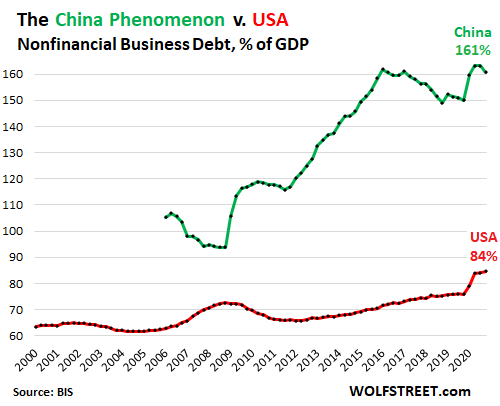 The two largest economies in the world at present are China and the U.S. Both of them (along
with virtually all other countries in this capitalist world) have been increasing debt in all
its forms, government debt, consumer debt, and business debt. Indeed, doing so is the only
way that capitalism can function at all in between its horrendous
The two largest economies in the world at present are China and the U.S. Both of them (along
with virtually all other countries in this capitalist world) have been increasing debt in all
its forms, government debt, consumer debt, and business debt. Indeed, doing so is the only
way that capitalism can function at all in between its horrendous