PLAGUE
1. The historically extremely serious and
deadly contagious disease caused by the bacterium Yersinia pestis carried by fleas
which infest rodents, which can then hop off the rodents and bite and infect humans. A severe
infection leads to the development of “buboes”, or swollen acutely inflamed lymph nodes,
which leads to the disease also being called the “bubonic plague”. The plague periodically
devastated Europe and other areas, especially during the Middle Ages. The first recorded
appearance of the disease was in the Egyptian port town of Pelusium in the summer of 541 C.E.
[“A.D.”]. However, it is now suspected that epidemics of this disease occurred even in
prehistoric times. [See: “Virulent Plague Might Have Obliterated Stone-Age Scandinavia”,
New York Times, October 31, 2024.]
The plague was the most notorious and deadly
epidemic in human history. In the 14th century, under the name “the Black Death”, it killed
half the population of Europe. However, it is now easily controlled by antibiotics.
2. [More loosely:] Other epidemics, or
dangerous social developments, as in “a plague of rats exists in New York City”.
PLANCK, Max (1858-1947)
Important German theoretical physicist, the first of a series of physicists (including
Albert Einstein and Niels Bohr) who founded
quantum mechanics. Philosophically, Planck was an
inconsistent materialist.
“If a revolution occurred in physics in December 1900, nobody seemed
to notice it. Planck was no exception, and the importance ascribed to his work is
largely a historical reconstruction. Whereas Planck’s radiation law was quickly
accepted, what we today consider its conceptual novelty—its basis in energy
quantization—was scarcely noticed. Very few physicists expressed any interest in the
justification of Planck’s formula, and during the first few years of the 20th century
no one considered his results to conflict with the foundations of classical physics.”
—Helge Kragh, “Max Planck: The Reluctant Revolutionary”, PhysicsWeb, Dec.
2000.
PLASTIC POLLUTION
 There are a great many forms of pollution of the environment under the present world capitalist-imperialist
system, because of its unrestrained profit motive. One of the worst forms, though insufficiently appreciated,
is the proliferation of more and more plastic products and pieces, in the oceans, in lakes and streams,
virtually everywhere on land, and even—in the form of microscopic motes—in the air we breathe. And thus,
even within virtually every human being’s own body. More and more evidence has been arising in recent years
about just how very seriously dangerous this all is: Not just for the environment itself, but also for
human health.
There are a great many forms of pollution of the environment under the present world capitalist-imperialist
system, because of its unrestrained profit motive. One of the worst forms, though insufficiently appreciated,
is the proliferation of more and more plastic products and pieces, in the oceans, in lakes and streams,
virtually everywhere on land, and even—in the form of microscopic motes—in the air we breathe. And thus,
even within virtually every human being’s own body. More and more evidence has been arising in recent years
about just how very seriously dangerous this all is: Not just for the environment itself, but also for
human health.
See also:
NANOPLASTICS
“The world produces about 400 million metric tons of plastic waste each year,
according to a United Nations report. About half is tossed out after a single use.”
—“Plastic Surgery...”, New York Times, Jan. 15, 2023, p. 3.
“Greenpeace says about 95% of plastics used in U.S. households are not being
recycled and wind up in landfills. The environmental advocacy group says it is not entirely because
of the lack of recycling efforts, but that only a few types of plastics are actually recyclable.
The sorting and collection of plastic items deposited in bins is also problematic, according to
Greenpeace. It says a significant portion of the debris is contaminated with toxic materials.
Because plasic containers and wraps are so cheap and easy to use, that global use and resulting
waste could triple by 2060.” —Steve Newman, “Earthweek: a Diary of the Planet”, San
Francisco Chroncle, Oct. 30, 2022.
“A new U.N. report documents how plastic contaminants are building up in the soil
around the world. ‘We are starting to understand that the buildup of plastic can have wide-ranging
impacts on soil health, biodiversity and productivity,’ said co-author Elaine Baker of the University
of Sydney. The report warns that as plastic breaks down, it interferes with the ability of plants to
absorb water and nutrients in their roots and for water to be stored in the soil. Plastics are used
extensively in agriculture.” —Steve Newman, “Earthweek: a Diary of the Planet”, San
Francisco Chroncle, Oct. 23, 2022.
“Standard plastic will take 450 years to degrade in ocean water.” —New
York Times, “Biodegradable Isn’t What You Think”, Oct. 3, 2020.
“To be human is to contain plastic. Maybe this has been our fate all along: to
achieve final communion with our own garbage.” —Mark O’Connell, “What Are the Plastic
Particles In Our Bodies Doing to Us?”, New York Times, April 23, 2023.
[However, note well the strong efforts of
even those who lament plastic pollution and other forms of pollution to blame humanity in
general for this, and not the corporations who profit so greatly from this and the entire capitalist
system! The bourgeois message seems to be, yes this is all pathetic, all terrible, but it is the
fault of the people themselves (and not those who actually profit from this madness). People without
a strong class perspective haven’t got a clue about how to deal with the problems of the world!
—Ed.]
“Microplastics have been found in human blood, breast milk, and placentas. They’re
also pretty much everywhere you look. Yes, they are in our drinking water and the air we breathe. But
they’ve also been found in regions of the planet that you might think of as pristine, such as the French
Pyrenees, the Galápagos Islands, and even the Mariana Trench—the deepest part of the ocean. Most recently,
we’ve heard that the recycling process can release tons of microplastics into the environment.”
—Jess Hamzelou, MIT Technology Review: “The Checkup” (health newsletter), June 1, 2023.
PLATFORM [Internet]
An Internet operation or business which provides a service function for large numbers of people.
Well-known contemporary “platforms” are Google (for searches) and social-media platforms such
as Facebook. Although many such platforms are “free”, they are sometimes hugely profitable
capitalist operations because of the enormous amount of advertising they sell (and thus inflict
on the visitors to their sites).
“[There is] a shift from products to platforms. Many people encounter
evidence of this every day. The largest cab service owns no vehicles (Uber), the biggest
hotelier has no property (Airbnb), the most comprehensive retailer holds no inventory
(Alibaba) and the most valuable ‘media’ company creates some content but not much
(Facebook)....
“Platforms are a way for companies
to create marketplaces that allow both sides of the transaction to flourish—while the
firm, as gatekeeper, enjoys a tidy revenue stream.” —“Business Technology: A New Way to
Work”, a book review, The Economist, July 15, 2017, p. 72.
PLAZA ACCORD
A monetary agreement made in 1985 between the U.S. and four other major capitalist-imperialist
countries (Japan, West Germany, France and the United Kingdom) to depreciate the U.S. dollar
in relation to the Japanese yen and the German Deutsche Mark in order to promote U.S. exports
and attempt to reduce the huge and worrisome U.S. trade deficit. It is called the “Plaza
Accord” because the agreement was signed at the Plaza Hotel in New York City.
Bourgeois economists like to pretend that
their economic system is self-regulating through market forces, but this has never been
completely true, and it is much less true in the capitalist-imperialist era (since the late
19th century). In the sphere of international finances it is especially untrue since the
collapse of the Bretton Woods System in 1971 when President
Nixon refused to sell any more of the U.S.’s dwindling supply of gold in exchange for dollars
held by foreign nations. From that point on, the value of one major currency in terms of
another was allowed to “float”, but with substantial intervention by the central banks of each
country to move the currency to “float” in a direction beneficial to their own ruling class.
Exporting countries like Japan and Germany often seek to drive their own currencies lower (by
printing more yens and Marks and buying dollars with them) in order to promote exports. But
the resulting high price of the U.S. dollar then harms the exporting abilities of U.S.
corporations, who put heavy pressure on U.S. politicians to do something about it. And what
the U.S. did about it in 1985 was to in turn put heavy political pressure (no doubt
involving behind-the-scenes economic and political threats) on Japan and West Germany to
allow the yen and Mark to strengthen and the dollar to depreciate.
From 1980 to 1985 the dollar had
appreciated by about 50% against the yen, but following the Plaza Accord, in 1985-1987
the dollar depreciated by 51% against the yen. Ironically, however, the dollar was
falling below the level desired and agreed upon (which was blamed by the U.S. government on
“currency speculators”) and a new agreement among the major countries, called the “Louvre
Accord” was made in 1987 to stabilize the dollar.
In some limited respects the Plaza Accord was
a “success” in the eyes of the U.S. ruling class. The big appreciation of the dollar in the
preceding five years was in fact largely reversed. However, the primary goal of substantially
reducing the U.S. trade deficit (especially with Japan) was only partially successful, and
even then only in the short-term. Moreover, some bourgeois economists believe that this
Accord was one of the major factors leading to the very serious stagnation in the Japanese
economy which began around 1990 and which still continues decades later. For reasons such
as these there has developed a strong feeling within the old-line capitalist-imperialist
countries that “currency manipulations” and accords are rather dangerous and can have
somewhat unpredictable and possibly perverse outcomes. In 2013 the G-7
group of countries agreed not to do this sort of thing anymore, in what has been termed a
sort of “anti-Plaza accord”.
Nevertheless, the continued development of the current world
overproduction crisis will almost inevitably lead
to further attempts to create “accords” to try to deal with a declining U.S. economy and its
fragile dollar and to desperately try to stabilize an inherently unstable international
monetary system.
PLEA BARGAINING
The proclaimed theory in the bourgeois justice system is that when a person is arrested and
charged with committing a crime there will then be a fair trial, and if they are found guilty,
they will be given a jail sentence appropriate for that particular sort of crime. However, the
reality is often very different indeed from that theory. There are a great many distortions and
perversions in every bourgeois system of so-called “justice”. One such perversion is the extremely
widespread system of plea bargaining. The fact is that the capitalist ruling class really
does not want to have trials at all. They want to do everything they can to force those arrested
to agree to plead guilty to the charges leveled against them and to be immediately sentenced
without the cost and bother of any trial, and without having to actually prove their
charges. And the usual method of accomplishing this is to offer a somewhat lighter sentence to
those who agree to plead guilty, and to pile on unfounded additional charges which would force a
much heavier sentence to those who insist on having a trial and who are then found guilty. What
this means is that it is often wise to plead guilty to crimes you are completely innocent of!
rather than risk the much heavier penalty of trying and failing to prove your innocence in court.
This routinely happens, and one time it happened
to my wife. Back some years ago she was at a peaceful demonstration in San Francisco which was
nevertheless attacked by the riot police. She was charged with an array of phony felonies,
including rioting and attacking a police officer. (She only weighed 90-some pounds at the time,
and the cop that attacked her with his heavy police club, hitting her hard on the neck and
injuring her, weighed around 200 pounds. The lie that she had attacked him was completely absurd.)
She was offered the reduced charges of a few days in jail and a year’s probation if she accepted
“a plea”; whereas if she went to trial and was found guilty she would likely receive a year in
jail (and would also lose her job, a fairly good job for the times). Although it angered her in
the extreme, she felt she had no choice but to agree to plead “guilty” to crimes she had not
actually committed. But then, that is just another fine example of the American system of justice
for you! —S.H.
“In 2021, 98.3 percent of federal criminal cases ended up as plea bargains.”
—New York Times Magazine, “Outside the Box”, June 12, 2022, p. 22.
PLEKHANOV, George [Georgi Valentinovich] (1857-1918)
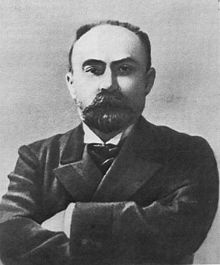 Important early Russian Marxist leader and theoretician, who played a very positive role in
building and promoting the Marxist movement in Tsarist Russia, but who in his later years broke
with Lenin and sided with the Mensheviks. Nevertheless, his writings on Marxist philosophy are
still very valuable and well worth serious study.
Important early Russian Marxist leader and theoretician, who played a very positive role in
building and promoting the Marxist movement in Tsarist Russia, but who in his later years broke
with Lenin and sided with the Mensheviks. Nevertheless, his writings on Marxist philosophy are
still very valuable and well worth serious study.
Plekhanov was the first important disseminator
of Marxism in Russia and the founder of its first Marxist organization, the
Emancipation of Labor group in 1883. Despite
his important theoretical contributions to Marxism, his practical revolutionary work was quite
deficient. Shortly after the real founding of the Russian Social-Democratic Labor Party at its
“Second Congress” in 1903, Plekhanov switched sides and joined the Menshevik faction. In World
War I he further degenerated and became a social chauvinist
and supported the Russian Tsarist side in the War. After the February Revolution in 1917, he
advocated maintaining the bourgeois provisional government, and was very hostile towards the
October Revolution led by Lenin.
“Let me add ... for the benefit of young Party members that you cannot
hope to become a real, intelligent Communist without making a study—and I mean
study—of all of Plekhanov’s philosophical writings, because nothing better has been
written on Marxism anywhere in the world.” —Lenin, “Once Again on the Trade Unions, the
Current Situation and the Mistakes of Trotsky and Bukharin” (Jan. 25, 1921) [after
Plekhanov’s death], LCW 32:94.
PLURALISM
A variety of somewhat related bourgeois idealist theories of “multiplicity” in philosophy and
politics, including:
1. [In ontology:]
The anti-materialist philosophical view that there is more than one basic type of real entities
which exist in the world. This is usually taken to mean that forms of both mind
and matter independently exist (which is the specific theory known
as dualism). In other words, pluralism in this sense is the
opposite of monism, the view that the world consists ultimately of
only one basic sort of thing (for materialists that means matter) and that apparently
quite different things in the world (such as mind) are really only aspects or
characteristics of certain types of “matter in motion” (as with functioning brains).
2. [In epistemology:]
The philosophical view that there is no provably correct knowledge or conception of the world
(scientific or otherwise) and that therefore a variety of different and conflicting beliefs
and “belief systems” are a good thing which should all be given equal respect and attention.
This is related to the simple-minded agnostic
doctrine known as post-modernism.
3. [In ethics:] The
notion that there is no real scientific basis for ethics, and that therefore different ethical
views in different societies are due merely to custom or pecularities of that society’s
historical development, and that all ethical views or “value systems” are therefore equally
“valid” and should be equally respected. (See:
ETHICAL RELATIVISM.)
4. [In bourgeois sociology:]
The denial that there is any basic principle or central
organizing theory for understanding society, let alone for understanding how and why human
society has changed through history. We Marxists dispute this of course, and put forward
historical materialism as the basis for understanding
society.
5. [In sociology and politics:] The view that
people of all sorts, of both sexes and of all “races”, ethnic groups,
nationalities, linguistic communities, and so forth, in any country should be allowed to thrive,
and should moreover be represented fairly and proportionally in all institutions and spheres of
life. This view—unlike the other meanings of pluralism listed here—is of course generally quite
valid. It is mostly a justified reaction against the tremendous inequalities, racism, sexism,
homophobia and other forms of discrimination which are so ingrained in capitalist society.
Unfortunately, in practice this view is often blended with the other (bourgeois) doctrines of
pluralism listed here, and care must be taken to avoid doing this!
6. [In bourgeois political theory:] The view
that political power either is, or should be, distributed among many different and conflicting
interest groups and associations. However, this doctrine is most often essentially hypocritical,
since in practice all the most powerful of these interest groups are part of the same capitalist
ruling class.
7. [In bourgeois political theory:] Views which
deny the centrality of social classes in politics, deny the basic class struggle between the
proletariat and the bourgeoisie, and which put forward instead the idea that there are large
numbers of competing “interest groups” based on a multitude of very narrow concerns and goals.
This theory is used to deny the necessity of social revolution and to argue against any program
to overthrow the dictatorship of the bourgeoisie
and establish instead the dictatorship of the
proletariat.
8. [In bourgeois (so-called) “political science”:]
The doctrine championed by theorists such as Robert Dahl and Charles Lindblom that true
classical democracy, or even true representative democracy, as the ideal envisioned by so
many earlier thinkers, was impossible, but that contemporary American society could still be
considered a “democracy” because it consists of multiple private interest groups competing
for power through the electoral process. Dahl viewed contemporary “liberal democracies”
(i.e., present-day forms of bourgeois democracy)
as “polyarchies” or systems of the rule of many competing
elite interest groups and factions rather than of the rule of
any single socioeconomic class. According to this theory this system is basically “fair”
and “democratic” because every special interest can organize itself and struggle for
influence (within this continuing contest of private grabbing for privileges and power).
However, this supposed “countervailing power” of other interest groups ignores the fact that
some interest groups have much more wealth (and thus power) than others. In this deeply
anti-democratic bourgeois theory, elections determine which of these elite factions (or
which coalitions of them) will govern for a period, and this is the claimed to be the best
sort of political arrangement that is possible in the world today. (Ha!)
9. [In bourgeois educational theory:] The view
that since there is (supposedly) no one basically correct view of the world, acquiring a good
“liberal arts” education means acquiring a general familiarity with a large range of views and
theories in history, philosophy, politics, ethics, sociology, economics, etc. Such programs of
study almost invariably turn out to be shallow and superficial. Moreover, while this strongly
encourages eclecticism, it also nevertheless first of all
promotes the essential doctrines and ideas favored by the bourgeoisie (such as their “right”
to rule under one excuse or another). This is the sort of mis-education that leads
academics to think they understand “Marxism” after what is in almost all cases the barest
superficial and distorted taste of it.
Dictionary Home Page and Letter Index
MASSLINE.ORG Home Page